Think in sequences, not door measurements
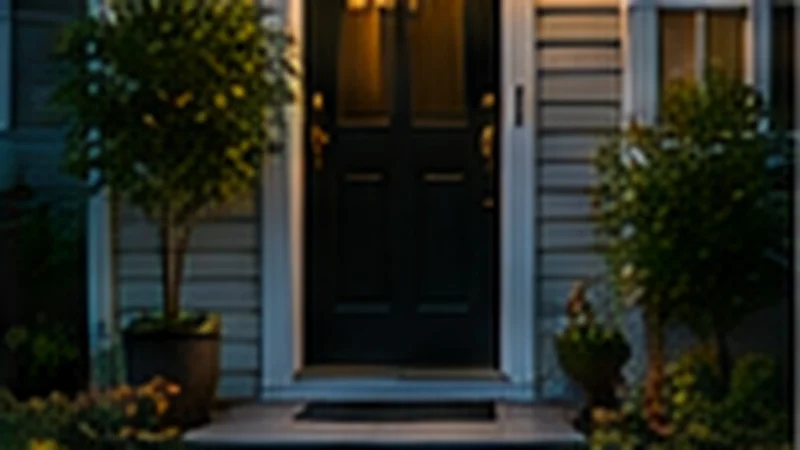
A doorway works as part of a route: approach, landing, lock, threshold, door swing, interior clear space. A wide door is not very helpful if the person must stand on an uneven step while unlocking it or if furniture blocks the interior path.
Create a stable landing
The area immediately outside and inside the door should be firm, uncluttered, and large enough for the way the household uses it. Packages, shoes, umbrella stands, and decorative planters should not reduce the space needed to operate the door.
Manage water before it becomes a floor problem
Check gutters, downspouts, drainage, snow/ice patterns, and mats. A mat that slides can become its own hazard. Outdoor surfaces and entry transitions should shed water and remain in good repair.
Improve lighting for the entire arrival
Light the steps or ramp, landing, lock, threshold, and interior transition. The person should not have to unlock a door in darkness and then enter a dark hall.
Use rails or ramps when they solve the actual route problem
NIA suggests ramps with handrails as one possible aging-in-place modification. A ramp is not automatically necessary at every entrance, and a poorly designed ramp can create new slope, drainage, and space problems. Evaluate the person, the site, and local requirements.
Doorway width is only one accessibility factor
If a walker or wheelchair is used, clear opening width matters, but so do thresholds, approach angles, door hardware, force required to open the door, and space to turn. ADA standards can be useful reference material, but private residential requirements may differ.
Quick Reference
| Entrance feature | What to check | Common improvement |
|---|---|---|
| Landing | Stable, clear, enough standing room | Remove clutter; repair surface |
| Lighting | Approach + lock + threshold visible | Add fixture/automatic lighting |
| Step/threshold | Stable, visible, not loose | Repair or modify transition |
| Rail | Secure and reachable | Install/repair appropriate support |
| Door operation | Easy to unlock/open without awkward balance | Adjust hardware/closer; improve landing |
| Weather | Water/ice not collecting at step | Improve drainage and maintenance plan |
Make space to stop before opening the door
An entrance is easier when you can stand securely while finding keys, handling a lock, carrying a package, or waiting for the door to open.
Keep the landing clear and large enough for your normal routine. Move planters, decorative objects, and delivery clutter out of the area where your feet need to go.
Manage rain, ice, leaves, and drainage
Outdoor entrances change with weather. Water can collect near a threshold, leaves can hide an uneven surface, and ice can form where roof or gutter drainage crosses the walkway.
Watch the entrance during bad weather, not only on a dry day. Repair drainage problems and choose maintenance routines that keep the surface predictable.
Make door hardware easy to operate
A stiff lock, tight door closer, round knob, or heavy storm door can turn a simple entrance into a two-handed task.
Repair alignment problems first. Lever hardware or another easier-to-use control may help, but the entire opening should still latch securely and work for everyone who uses it.
Think about packages and visitors
Doorways are often used while talking to a visitor, receiving a delivery, holding a pet back, or moving a package inside. Those distractions change how the space is used.
Create a clear place for packages and make sure the route from the door into the home is not blocked by furniture or storage.
Make the next change easy to understand
You do not need to solve every possible problem at once. Choose the issue that affects a real routine most often, decide what a useful improvement would look like, and start there. After the change, use the space normally and see whether it actually made the task easier.
If the solution involves construction, electrical work, plumbing, structural support, significant changes to stairs or entrances, or another specialized task, use qualified help for that part of the job. A clear description of the problem will make it easier to compare options and ask useful questions.
Before you buy a product to solve the problem
Start with the difficulty, not the product name. A light, rail, mat, piece of furniture, or other accessory is useful only when it addresses the specific place where the routine becomes harder. Measure the space, check how the item will be installed, and consider whether it creates a new edge, cord, obstruction, or maintenance task.
If several products appear to solve the same issue, choose the one you can understand, maintain, and use consistently. A simple solution that fits the home and your routine is usually more useful than a complicated one with features you do not need.
Recheck the change during a normal week
Do not judge an improvement only in the first few minutes after it is installed or rearranged. Use the room during normal mornings, evenings, errands, cleaning, and other routines. A change may work well when the room is quiet but create a problem when you are carrying something or when another person is using the space.
If you still hesitate, reach for unstable support, or avoid the route, note exactly what remains difficult. That gives you a better starting point for the next adjustment and helps prevent unnecessary changes elsewhere in the home.
Use a simple priority order
When several issues appear at once, begin with something that affects a route or task you use often, especially when the condition is loose, unstable, hard to see, or getting worse. Next, address repeated inconveniences that create extra reaching, carrying, or awkward movement. Cosmetic changes can usually wait until the practical problems are handled.
Write the priority beside each observation so the list stays useful after the walkthrough is over. A short list of clear next actions is easier to complete than a long collection of general concerns.
Ask specific questions when you bring in help
If you hire a contractor, electrician, installer, handyman, or another professional, describe the exact difficulty you are trying to solve. Explain when it happens, who uses the space, and what you want to be easier afterward. That gives the professional more useful information than simply asking for a “senior-friendly” product.
Ask how the proposed change will be installed, what maintenance it needs, whether it affects another part of the route, and whether a smaller option could solve the same problem. Clear questions make it easier to compare recommendations.
Sources
Frequently Asked Questions
Does every entrance need a ramp?
No. A ramp should solve a real access problem and be designed for the site, user, drainage, and applicable rules.
Are lever handles better than round knobs?
Many people find lever hardware easier to operate, but the best choice depends on the door, lockset, security needs, and user preference.
How wide should a doorway be?
Accessible-design standards provide reference dimensions, but a private home may have different requirements. Measure the actual mobility device and route, and check local rules for remodeling.
What should I do about a raised threshold?
If it creates difficulty, ask whether it can be repaired, reduced, beveled, or replaced without compromising weather protection. Use a qualified professional where the threshold is part of the door system.
What is the biggest entrance mistake?
Focusing only on the door while ignoring the landing, lighting, water, step, rail, and interior approach.
Keep this visual on Pinterest
Save the infographic so you can return to the checklist or comparison when you need it.
 Save on Pinterest