
A safer home is not a home filled with warning labels or special equipment. It is a home that lets you move through ordinary routines with fewer surprises. The most useful improvements often begin with familiar details: better light on a stair, a clear path to the bathroom, a secure handrail, or everyday items moved within easier reach.
A safer home starts with the way you actually live
Home safety after 55 is not about turning a familiar house into a clinical space. It is about removing avoidable friction: the rug that catches a toe, the stair that is hard to see at night, the entry that becomes slippery in rain, or the hallway that is narrowed by furniture. The National Institute on Aging recommends looking at the home room by room and correcting immediate dangers first. That approach keeps the process practical and prevents a long wish list from becoming overwhelming.
Falls deserve particular attention because CDC continues to identify them as the leading cause of injury among adults 65 and older. In 2026, CDC reported that more than 14 million adults 65+ — about one in four — report falling each year. The useful takeaway is not that falling is inevitable. It is that small environmental changes and sensible planning can reduce avoidable risk.
Start with the places that create the most repeated difficulty
- Walking paths: keep the routes you use every day clear, predictable, and wide enough for how you move through the home.
- Lighting: improve visibility at stairs, entrances, hallways, bathrooms, and the path between the bed and bathroom.
- Floors: secure loose carpet, remove or firmly secure unstable rugs, and address slick surfaces where water is common.
- Stairs and level changes: repair loose rails, improve contrast and lighting, and avoid storing objects on steps.
- Entrances: create a stable, well-lit transition from outside to inside, with a secure rail or ramp when it is actually needed.
Decide what needs attention now and what can wait
A useful safety review separates problems into three groups. Fix now means an obvious hazard is already present, such as a loose handrail or curled rug edge. Plan soon means the home works today but a change would make a common task easier, such as adding better lighting near a stair. Monitor means the feature is currently working but should be checked over time, such as a threshold, flooring seam, or outdoor step exposed to weather.
Use standards as a reference, not a rule for every private home
Build the home around routines
The most useful changes are often attached to a repeated routine: getting up at night, carrying laundry, entering with groceries, taking a shower, reaching a light switch, or moving between rooms. Watch where you pause, stretch, step around something, or reach for support. Those moments reveal where the house is demanding extra effort. A safer home is usually the result of dozens of small, sensible decisions rather than one dramatic remodel.
Use the Home Safety Checker as a starting list
The Aging-in-Place Home Safety Checker is designed to turn a room-by-room walkthrough into an action list. It should never diagnose fall risk or replace professional evaluation. Its job is simpler: help you notice environmental issues, prioritize them, and connect each issue to the relevant guide on this site.
Home Safety Priority Table
| Area | Fix now | Plan soon | Monitor |
|---|---|---|---|
| Stairs | Loose or missing railing; objects on steps | Improve lighting or contrast | Check rail fasteners and tread wear |
| Floors | Loose rug, curled edge, exposed cord | Replace slick or hard-to-maintain surface | Watch transitions and carpet seams |
| Lighting | Dark stair/entry/bathroom path | Add task or motion lighting | Replace weak bulbs and clean fixtures |
| Entrances | Unstable step or broken surface | Add rail/ramp/covered landing if useful | Check drainage and seasonal slip hazards |
| Walking paths | Blocked or narrow daily route | Rearrange furniture | Recheck after adding new furniture/equipment |
Begin with the places you use every day
Walk the routes between the bedroom, bathroom, kitchen, main entrance, laundry area, and the place where you usually sit. Notice loose rugs, cords, narrow passages, hard-to-see steps, awkward turns, and anything you reach for when you need support. A problem that repeats every day deserves attention before a theoretical problem in a rarely used room.
Make one short list while you walk. Mark anything that feels unstable, hard to see, slippery, or difficult to reach. Fix obvious hazards first, then plan improvements that would make ordinary routines easier.
Make nighttime movement easier
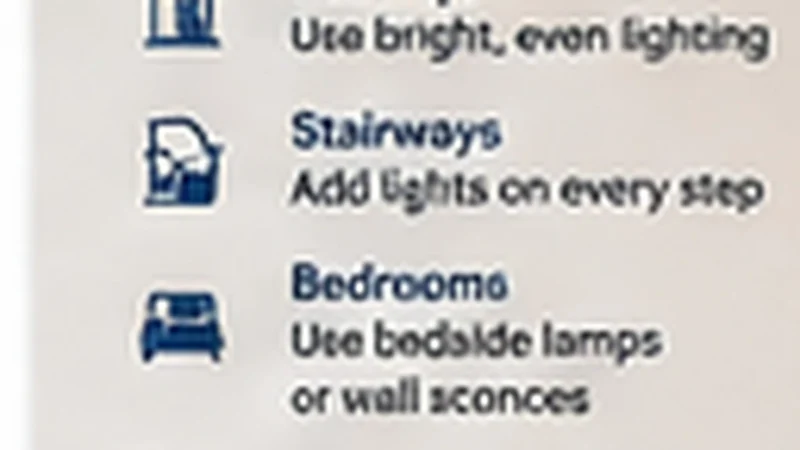
A home can feel completely different after dark. The path from the bed to the bathroom, the stairs, an entryway, and the route to a light switch may need more illumination than they do during the day. Glare can also be a problem, so the goal is clear, even light rather than the brightest bulb available.
Test the home after sunset. Turn off decorative lighting and move through the spaces the way you normally would. Add light where you hesitate, where a step changes height, or where you cannot clearly see the floor.
Look closely at floors and thresholds
Small changes underfoot can create repeated trouble. Curled rug corners, loose carpet, polished flooring, raised thresholds, and wet bathroom surfaces can all make walking less predictable. The best solution depends on the surface and how the room is used.
Secure or remove unstable rugs, repair loose flooring, keep wet areas dry, and make level changes easy to see. If a threshold is necessary, keep the surrounding route clear so you can approach it without turning or carrying too much.
Check support where you naturally reach
People often reveal where support is missing by grabbing a towel bar, door frame, counter edge, or piece of furniture. Those objects were not designed to hold body weight. If you repeatedly reach for support in the same place, that is useful information.
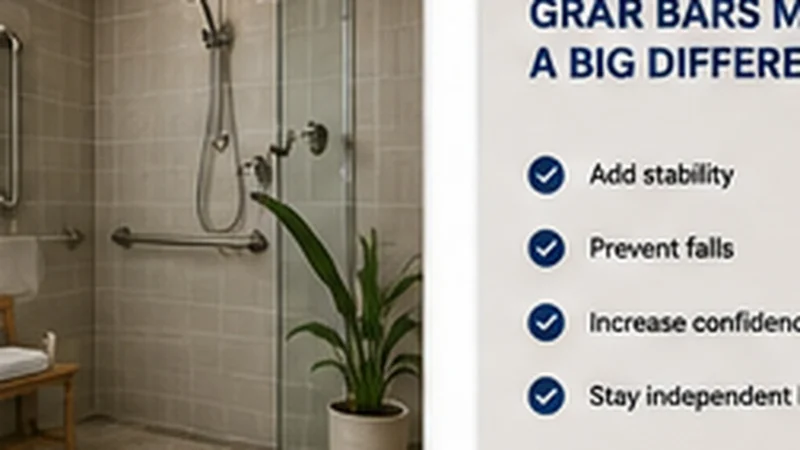
Consider a properly installed handrail, grab bar, sturdy seat, or another stable support where it matches the way you move. Installation matters; a support device is only helpful when it is anchored securely and placed where you can actually use it.
Reduce reaching and carrying
Many home-safety problems come from combining movement with another task. Carrying laundry on stairs, reaching above shoulder height for heavy cookware, or walking through a dark room with both hands full leaves less room to recover if something goes wrong.
Move frequently used items to comfortable storage, divide heavy loads into smaller trips, and keep one hand free on stairs when possible. A change in storage or routine can solve a problem without changing the room itself.
Plan larger changes around a specific problem
A ramp, stair lift, bathroom renovation, wider doorway, or first-floor bedroom can be valuable when it solves a real repeated difficulty. It should not be treated as an automatic requirement simply because someone is over 55.
Before spending money, write down the exact task that is hard today and what you want the project to improve. Compare smaller options first, then use qualified professionals when the work involves structure, electricity, plumbing, permits, or specialized installation.
Review the home again after a change
A safety improvement is useful only if it works in real life. A new rail may be in the wrong place. A brighter bulb may create glare. A piece of furniture moved to widen a path may block another route.
Live with each change and reassess it during normal routines. The goal is not a perfect checklist score. The goal is a home that feels predictable, comfortable, and easier to use every day.
Take the next step that makes daily life easier
You do not need to change everything at once. Choose one repeated frustration connected with home safety after 55, make one practical improvement, and see whether it makes the next week easier. A useful change should reduce effort, confusion, risk, or unnecessary dependence without taking away the parts of your routine you value.
When the issue involves specialized construction, professional services, legal requirements, health questions, or another area where individual circumstances matter, use qualified help for that part of the decision. The purpose of this guidance is to help you notice the right questions and approach the next step with more confidence.