Start with the routes you use most
Instead of scanning the whole house at once, trace a normal day: bed to bathroom, bedroom to kitchen, front door to living room, laundry route, stairs, and the path used when carrying groceries. A hazard matters more when you encounter it repeatedly or when both hands are occupied.
Remove objects that make walking unpredictable
The goal is not an empty room. It is a predictable route. Move low furniture, baskets, pet bowls, cords, shoes, and decorative items away from the main path. Pay attention to objects that migrate during the week, such as charging cables, delivery boxes, or laundry baskets.
CDC specifically recommends getting rid of things a person could trip over. NIA and CPSC also highlight loose rugs, poor lighting, and unstable railings as practical home hazards.
Make floor transitions easier to see and cross
A doorway threshold, carpet edge, or change from dark flooring to dark stairs can be difficult to notice even when the surface is technically intact. Look at transitions from the direction you approach them. If a transition is raised, damaged, or loose, repair it rather than relying on memory to step over it.
Treat lighting as part of the walking surface
Good lighting helps you identify the edge of a step, an object on the floor, or a wet patch before you reach it. Prioritize the top and bottom of stairs, entries, hallways, bathrooms, and nighttime routes. Add light where the task happens rather than simply installing a brighter bulb in the middle of the room.
Do not rely on furniture for support
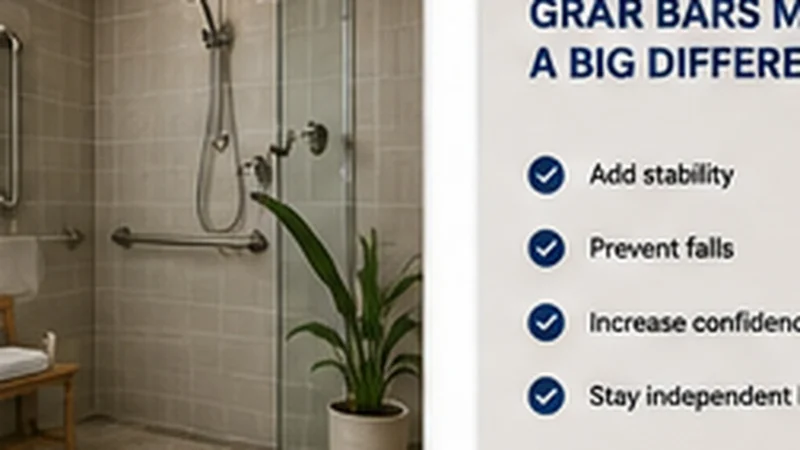
A chair back, towel bar, rolling cart, or lightweight table may feel convenient, but it is not designed to function as a support rail. If you regularly reach for the same object to steady yourself, that is useful information: the route may need a properly installed support, a layout change, or professional assessment.
Combine home changes with personal fall-prevention steps
CDC recommends that older adults who have fallen, feel unsteady, or are concerned about falling talk with a healthcare professional. Medication review, vision care, strength and balance, footwear, and health conditions can affect fall risk. The house matters, but it is not the entire picture.
Quick Reference
| Hazard | Better first step | Avoid |
|---|---|---|
| Cord across walkway | Reroute it along a wall or relocate the device | Taping a loose cord where feet still cross it |
| Loose rug | Remove it or secure it appropriately | Assuming a heavy rug cannot move |
| Dark stair | Add light at the stair and approaches | Relying on a distant room light |
| Unstable support | Install/repair proper support | Grabbing towel bars or movable furniture |
| Wet entry | Improve drainage/mat strategy and clean promptly | Using a mat that itself slides |
Watch for hazards created by normal habits
Many fall hazards are not permanent parts of the house. They appear because of ordinary routines: shoes left near the door, a pet toy in a hallway, a charging cable stretched across the floor, a laundry basket placed on a stair, or a delivery box waiting to be opened.
Look for items that regularly land in the same walking path. Give those items a better home. A basket for shoes, a charging station near an outlet, hooks for bags, and a clear place for packages can prevent the same obstacle from returning every day.
Make carrying tasks easier
Walking becomes less predictable when both hands are full or when you cannot see the floor in front of you. Laundry, groceries, trash, pet supplies, and household items can turn an otherwise clear route into a harder task.
Divide heavy loads, use a cart where appropriate, move supplies closer to where they are used, and keep one hand free on stairs when possible. If a task repeatedly requires an awkward carry, changing the routine may be more useful than changing the floor.
Do not create a new hazard while fixing another
Some quick fixes can introduce different problems. A thick nonslip mat may reduce slipperiness but create a raised edge. A bright lamp may improve visibility but place a cord across a walkway. Furniture moved for support may narrow the route.
After any change, walk the route again. Look at the full path, not only the spot you were trying to improve. A safer solution should make movement more predictable overall.
Know when the problem is not only the house
Home changes can reduce hazards, but they do not address every reason a person may fall. Vision, footwear, dizziness, medicines, strength, balance, and other personal factors can matter too.
If you have fallen, feel unsteady, or notice a new change in balance or dizziness, the home checklist should be only one part of the response. Discuss personal concerns with the appropriate healthcare professional while also correcting obvious hazards at home.
Make the next change easy to understand
You do not need to solve every possible problem at once. Choose the issue that affects a real routine most often, decide what a useful improvement would look like, and start there. After the change, use the space normally and see whether it actually made the task easier.
If the solution involves construction, electrical work, plumbing, structural support, significant changes to stairs or entrances, or another specialized task, use qualified help for that part of the job. A clear description of the problem will make it easier to compare options and ask useful questions.
Before you buy a product to solve the problem
Start with the difficulty, not the product name. A light, rail, mat, piece of furniture, or other accessory is useful only when it addresses the specific place where the routine becomes harder. Measure the space, check how the item will be installed, and consider whether it creates a new edge, cord, obstruction, or maintenance task.
If several products appear to solve the same issue, choose the one you can understand, maintain, and use consistently. A simple solution that fits the home and your routine is usually more useful than a complicated one with features you do not need.
Sources
Frequently Asked Questions
Are falls just a normal part of getting older?
No. CDC emphasizes that falls can be prevented. Risk changes with health, environment, medicines, vision, strength, and other factors, so prevention usually combines home changes with personal strategies.
Should I get rid of all furniture near walking paths?
No. Keep the furniture you use, but create a direct route with enough space to move comfortably. Remove pieces that force repeated side-stepping or create narrow pinch points.
Do brighter bulbs solve poor lighting?
Sometimes, but placement matters too. A brighter central fixture may still leave a stair edge or hallway transition in shadow.
What if I already fell once?
Tell a healthcare professional, especially if you were injured, felt dizzy, or are now worried about falling. Also review the exact location and sequence of the fall to see whether the home contributed.
Is a grab bar enough to prevent a fall?
No single feature prevents all falls. A properly installed grab bar can help in the right location, but flooring, lighting, layout, health, and behavior also matter.
Keep this visual on Pinterest
Save the infographic so you can return to the checklist or comparison when you need it.
 Save on Pinterest