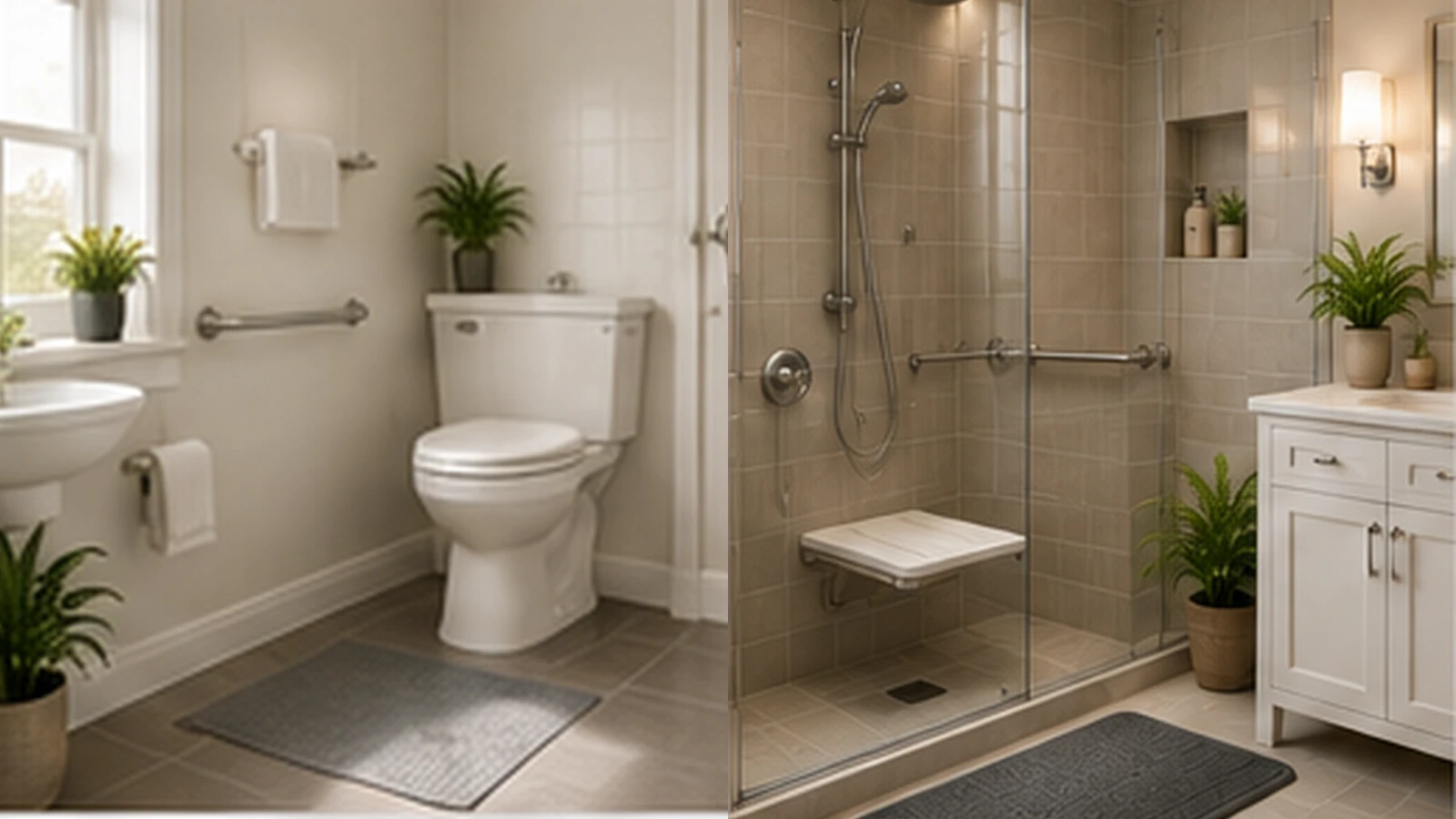
The biggest difference is the bathing routine
A walk-in shower changes the bathroom around showering. A walk-in tub changes the bathing routine around a watertight door and seated soaking. That distinction matters more than the marketing label.
In a shower, the user can usually enter before the water is turned on and leave after the water is off. In most walk-in tubs, the user enters through the door, closes it, fills the tub while seated, drains it, and then opens the door. Anyone comparing the two should think through that entire sequence rather than only the threshold height.
Entry and transfer
A low-threshold or curbless shower can reduce the need to step over a tub wall. It can also provide more room for a shower chair, caregiver assistance, or mobility device depending on the layout.
A walk-in tub still has a doorway threshold. The step is much lower than a conventional tub wall, but it is not always zero. Door width, seat height, floor traction, and the reach to controls should all be evaluated.
Seated bathing
A walk-in tub is built around seated bathing and may suit someone who enjoys soaking. A shower can also support seated bathing with a properly selected bench or shower chair.
The difference is flexibility. A shower may work for standing or seated use and can sometimes adapt more easily over time. A tub can be comfortable for soaking but may be more specialized.
Water and drainage
Walk-in tubs introduce a practical issue that ordinary tubs do not: the door generally cannot be opened while the tub contains water. Fill and drain time therefore matter. Ask the manufacturer how much water the tub holds, what water-heater capacity is recommended, and how quickly the specific model drains under real household plumbing conditions.
A shower typically uses less standing water and provides immediate exit once the shower is off, but drainage slope, waterproofing, and splash control must be designed correctly.
Space and remodeling
Replacing a conventional tub with a shower may fit within the existing footprint, although a true curbless design can require floor, drain, and structural work. Walk-in tubs are available in retrofit sizes, but plumbing, electrical requirements, door swing, service access, and water-heater capacity can change the project.
The most expensive surprise is often not the fixture itself. Moving drains, opening walls, correcting subfloor damage, adding reinforcement, changing electrical circuits, or modifying doorways can dominate the budget.
Cleaning and maintenance
Both options need cleaning, but the geometry differs. A shower may have glass, grout, tracks, benches, or curtain systems. A walk-in tub has a door seal, seat, jets on some models, and additional surfaces that must stay clean and functional.
Ask who will perform routine cleaning and maintenance. A product that is easy to use but difficult to maintain may not be the best long-term choice.
How to choose
Choose the option that makes the hardest part of bathing easier without creating a new problem. If stepping over a tub wall is the main barrier and soaking is not important, a lower-entry shower often provides a simpler path. If seated soaking is strongly preferred and the fill/drain routine works for the user, a walk-in tub may fit better.
Before signing a contract, test the entry, seat, controls, door, and handholds in person when possible.
Quick Reference
| Factor | Walk-In Shower | Walk-In Tub |
|---|---|---|
| Entry | Low threshold or curbless possible | Low door threshold, usually not zero |
| Bathing style | Standing or seated | Primarily seated soaking |
| Exit | Immediate after water is off | Typically after tub drains |
| Layout flexibility | Often high | Fixture-specific |
| Water use | Varies by shower length | Can require a large fill volume |
| Maintenance | Drain, grout/pan, glass/curtain | Door seal, drain, seat, optional jets |
| Best fit | Flexible showering and easier access | People who strongly value seated soaking |
Think about getting in and getting out, not just bathing
The most important difference between a walk-in shower and a walk-in tub may appear before or after the bath itself. A shower can offer a low or nearly level entry, while a walk-in tub usually requires entering the tub before filling it and remaining inside while the water drains before opening the door.
Picture the entire routine, including undressing, entering, reaching the controls, sitting or standing, drying, and leaving. A feature that sounds comfortable in a showroom may feel different when you consider the whole sequence.
Compare how quickly you want to enter and exit
A walk-in shower generally allows you to enter and leave without waiting for a basin to fill or drain. A walk-in tub may provide built-in seated bathing but can require more time inside the fixture.
Think about whether you get cold easily, how long you like to bathe, and whether you need to leave the bathing area quickly. Ask for a demonstration of fill and drain behavior before buying a specialized tub.
Consider what happens if someone else uses the bathroom
A bathroom often serves more than one person. A spouse, visitor, grandchild, or caregiver may have different preferences. A large specialized tub can change how the room works for everyone else.
If the bathroom is shared, discuss whether the new fixture still supports ordinary showers, cleaning, storage, and movement. The best choice should solve your problem without making the room unnecessarily difficult for other regular users.
Look beyond the purchase price
The fixture price is only one part of the project. Plumbing changes, waterproofing, electrical work, wall repair, flooring, permits, removal of the old fixture, and future maintenance can change the total.
Ask contractors to separate the fixture cost from the installation work. This makes it easier to compare a walk-in tub with a low-entry shower or a smaller targeted improvement.
Choose the next change around the way you use the bathroom
You do not need every product marketed as accessible or senior-friendly. Choose the change that makes a real part of your daily routine easier, safer, or less tiring. Then use the bathroom normally and decide whether the improvement solved the problem you started with.
When the work involves structural attachment, plumbing, electrical work, waterproofing, major layout changes, or local permit requirements, use qualified help for that part of the project. A clear description of the difficulty will help you ask better questions and compare options.
Sources
Frequently Asked Questions
Is a walk-in tub safer than a walk-in shower?
Not automatically. Safety depends on the individual, threshold, traction, support, seat, controls, installation quality, and bathing routine.
Can a walk-in shower be completely curbless?
Yes in some homes, but creating the needed drainage slope and waterproofing can require substantial floor or structural work.
Do walk-in tubs fill before you enter?
Most are designed so the user enters first, closes the door, then fills the tub. Confirm the sequence for the exact model.
Which option is easier to clean?
It depends on the design. Showers may have grout and glass; tubs may have door seals, seats, and jets. Compare the specific products.
Which is usually easier to adapt later?
A spacious low-entry shower often offers more flexibility for seating or mobility assistance, but the room layout matters.
Keep this visual on Pinterest
Save the infographic so you can return to the checklist or comparison when you need it.
 Save on Pinterest