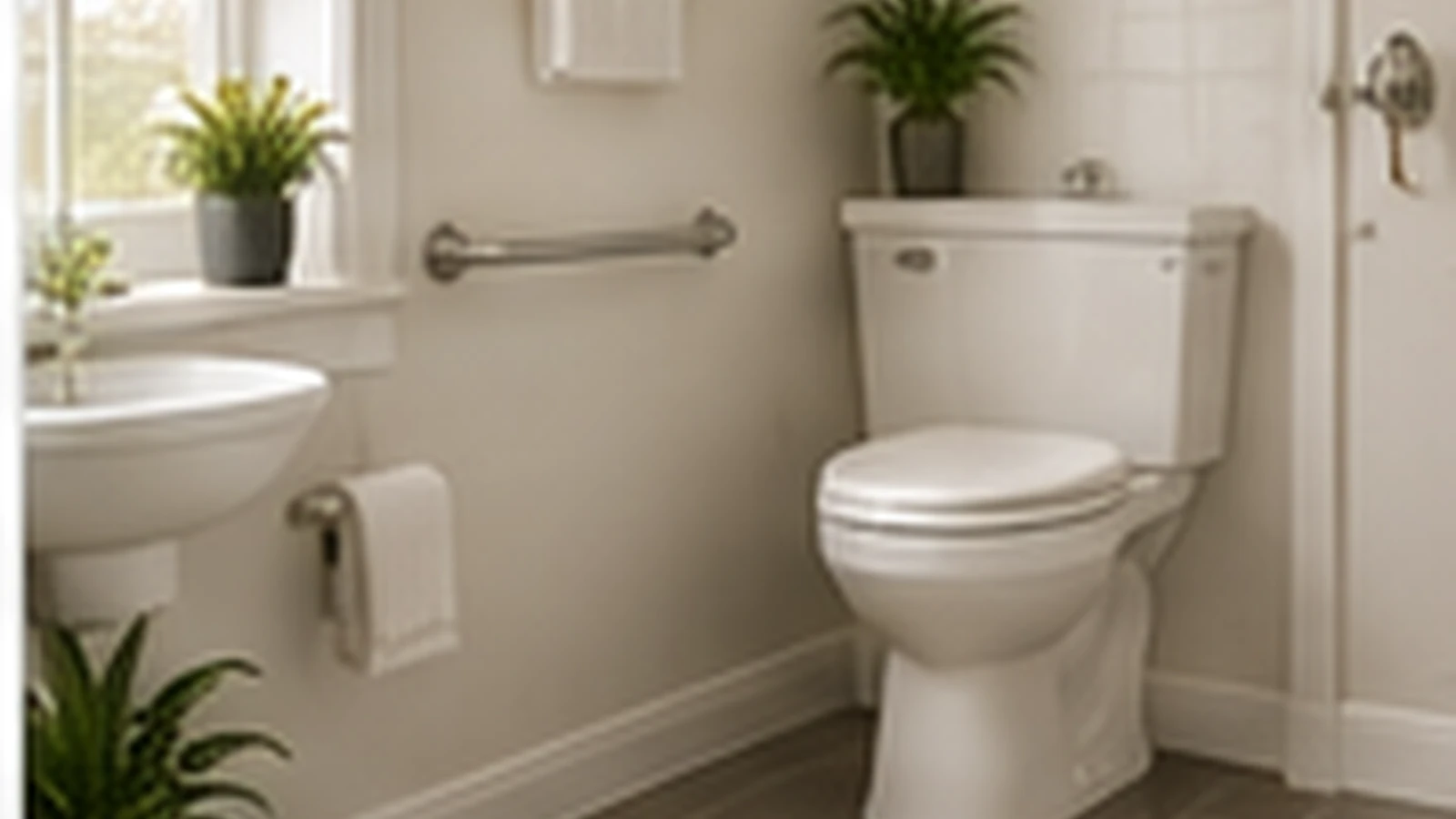
Start with the highest-risk moments
A bathroom can look tidy and still be difficult to use. The important question is not whether the room looks “accessible.” It is whether everyday actions—stepping into the shower, turning, reaching for a towel, standing from the toilet, walking on a damp floor, and entering at night—can be completed without unnecessary loss of balance.
Walk through the room in the order it is normally used. Note every point where someone reaches for a towel bar, vanity, shower door, or wall for balance. Those improvised support points are useful clues: they often identify where a properly installed support feature or layout change would matter most.
Improve traction before adding gadgets
Wet-area traction deserves immediate attention because water changes how the floor behaves. Look for polished surfaces, worn finishes, loose bath mats, curling rug edges, and transitions that create a small lip underfoot.
NIA recommends nonslip strips on surfaces that may get wet and grab bars near toilets and in tubs or showers. The goal is a floor that stays predictable when damp. A product labeled “non-slip” is not automatically safe if it shifts, peels, or is poorly matched to the surface. CPSC recalls have included bath-safety products that became unstable, so permanent or temporary products should be installed and maintained exactly as intended.
Add support where movement actually happens
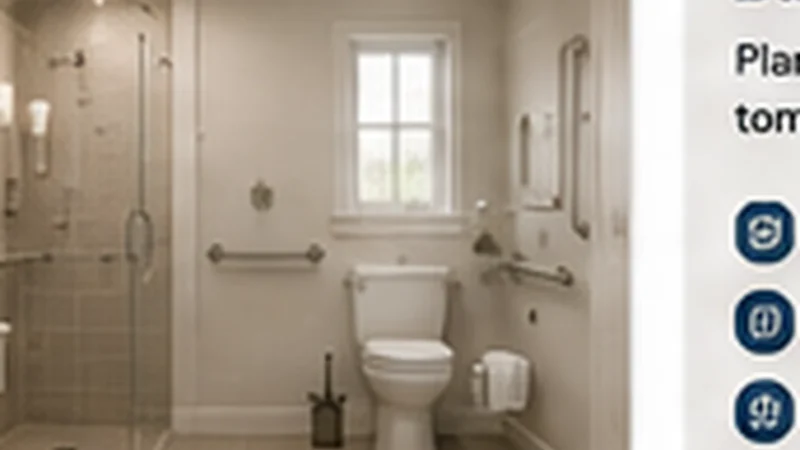
A grab bar is most useful when it is placed for a specific action: stepping over a threshold, lowering to a seat, standing from the toilet, turning in a shower, or transferring from a mobility device. That is different from placing a bar wherever there happens to be wall space.
Wall structure matters. A support bar must be anchored to adequate backing or an installation system rated for the intended load. A towel bar is not a substitute. If the wall cannot support a secure installation, a contractor may need to add blocking or use another approved mounting solution.
Make the bathing area easier to enter and use
If a high tub wall is the most difficult part of the room, small upgrades elsewhere will not solve the main problem. Options range from a properly installed grab bar and stable bathing seat to replacing the tub with a lower-entry or curbless shower.
The best solution depends on how the person enters, whether seated bathing is preferred, how much space is available, and whether the bathroom may need to accommodate a walker or wheelchair later. Avoid choosing a walk-in tub or shower solely from advertising language. Compare entry height, drainage time, seat design, controls, cleaning, emergency exit, and the physical act of getting in and out.
Improve the toilet area
The toilet area should provide room to approach, turn, sit, and stand without bumping into the vanity or door. If standing is difficult, the solution may involve a different seat height, secure support, or both.
The ADA Standards include accessible water-closet dimensions for covered facilities and certain covered residential settings, but those dimensions are not automatically a legal requirement for a private single-family bathroom. They are useful design references. In a private home, the better planning question is what height and side clearance work for the actual user, the room, and any mobility equipment.
Use lighting that removes shadows
A single ceiling fixture can leave the shower, toilet, and vanity in shadow. Use layered lighting so the room is evenly visible from the doorway through the bathing area. Nighttime lighting should make the route easy to follow without creating glare.
Switches should be easy to find before stepping into a dark room. Motion or vacancy sensors can help in some homes, but controls should remain intuitive and manually usable.
Keep essentials within comfortable reach
Place soap, towels, toilet paper, grooming items, and frequently used supplies where they can be reached without twisting, bending deeply, or stretching from a wet surface. This simple change often costs nothing.
Keep the floor clear of scales, baskets, cords, laundry, and decorative items in the main path. Storage should reduce movement rather than force awkward reaching.
Quick Reference
| Area | Check | Useful first action |
|---|---|---|
| Shower/tub | Entry height, wet traction, support | Correct slippery surface and unstable support first |
| Toilet | Standing, side clearance, reach | Add secure support or evaluate seat height |
| Floor | Loose mats, polished/wet surface | Remove shifting mats and improve traction |
| Lighting | Dark corners, glare, nighttime route | Add even light and an easy-to-find control |
| Storage | Reaching, bending, clutter | Move daily items into comfortable reach |
Walk through the bathroom in the order you actually use it
A bathroom can look open and attractive while still making one part of the routine difficult. Start at the doorway and move through the room in order. Notice whether you can close the door without backing around a fixture, whether the floor stays dry, where you put clothing and towels, how you reach the toilet, and what happens when you enter and leave the shower or tub.
Pay attention to the moments when your hands are occupied. Drying off, carrying clothing, adjusting water temperature, and reaching for toiletries all change how much support you have available. The most useful improvement often appears when you look at the whole sequence instead of one fixture.
Keep frequently used items inside a comfortable reach zone
Soap, shampoo, towels, toilet paper, grooming supplies, and cleaning products should not require repeated stretching, deep bending, or climbing. A beautiful storage cabinet is not very helpful if the items you use every morning are on its highest shelf.
Move daily items to easy-to-reach shelves, drawers, hooks, or recessed storage. Keep heavier backup supplies lower and stable. Avoid hanging towels or robes where they narrow the doorway or become something you instinctively grab for support.
Make the room easier to recover and clean
Safety improvements also need to survive normal cleaning and maintenance. Loose bath mats, crowded shower caddies, mildew around a bench, or a grab bar hidden behind hanging towels can reduce the usefulness of the original improvement.
Choose surfaces and equipment you can clean without awkward kneeling or stretching. Keep the floor easy to dry, inspect caulk and grout, and make sure drains clear properly. A bathroom that is easier to maintain is more likely to stay safe.
Test every change before assuming the problem is solved
After moving a mat, adding a light, installing a rail, or changing storage, use the bathroom for several normal days. A new item can create a different problem, such as narrowing the shower entry or placing a sharp edge where you turn.
Ask whether the change reduced the effort you noticed at the beginning. If not, describe what still feels difficult before adding more equipment.
Choose the next change around the way you use the bathroom
You do not need every product marketed as accessible or senior-friendly. Choose the change that makes a real part of your daily routine easier, safer, or less tiring. Then use the bathroom normally and decide whether the improvement solved the problem you started with.
When the work involves structural attachment, plumbing, electrical work, waterproofing, major layout changes, or local permit requirements, use qualified help for that part of the project. A clear description of the difficulty will help you ask better questions and compare options.
Sources
Frequently Asked Questions
What is the first bathroom safety change to make?
Correct anything that is unstable or slippery now. Loose mats, unstable tub bars, poor lighting, and cluttered wet-area paths deserve attention before cosmetic upgrades.
Are grab bars only for people with disabilities?
No. A well-placed grab bar can provide a stable handhold during everyday bathing or toilet use. Placement should reflect how the person actually moves.
Can I use a towel bar for support?
No. Towel bars are not designed as body-support devices and may pull away from the wall.
Does an accessible bathroom have to look institutional?
No. Grab bars, seating, lever controls, lighting, and lower-threshold showers are available in residential designs that can look like ordinary high-quality bathroom fixtures.
Should I remodel the entire bathroom at once?
Not necessarily. Correct immediate hazards first, then phase larger changes according to the person’s routine, budget, and future needs.
Keep this visual on Pinterest
Save the infographic so you can return to the checklist or comparison when you need it.
 Save on Pinterest