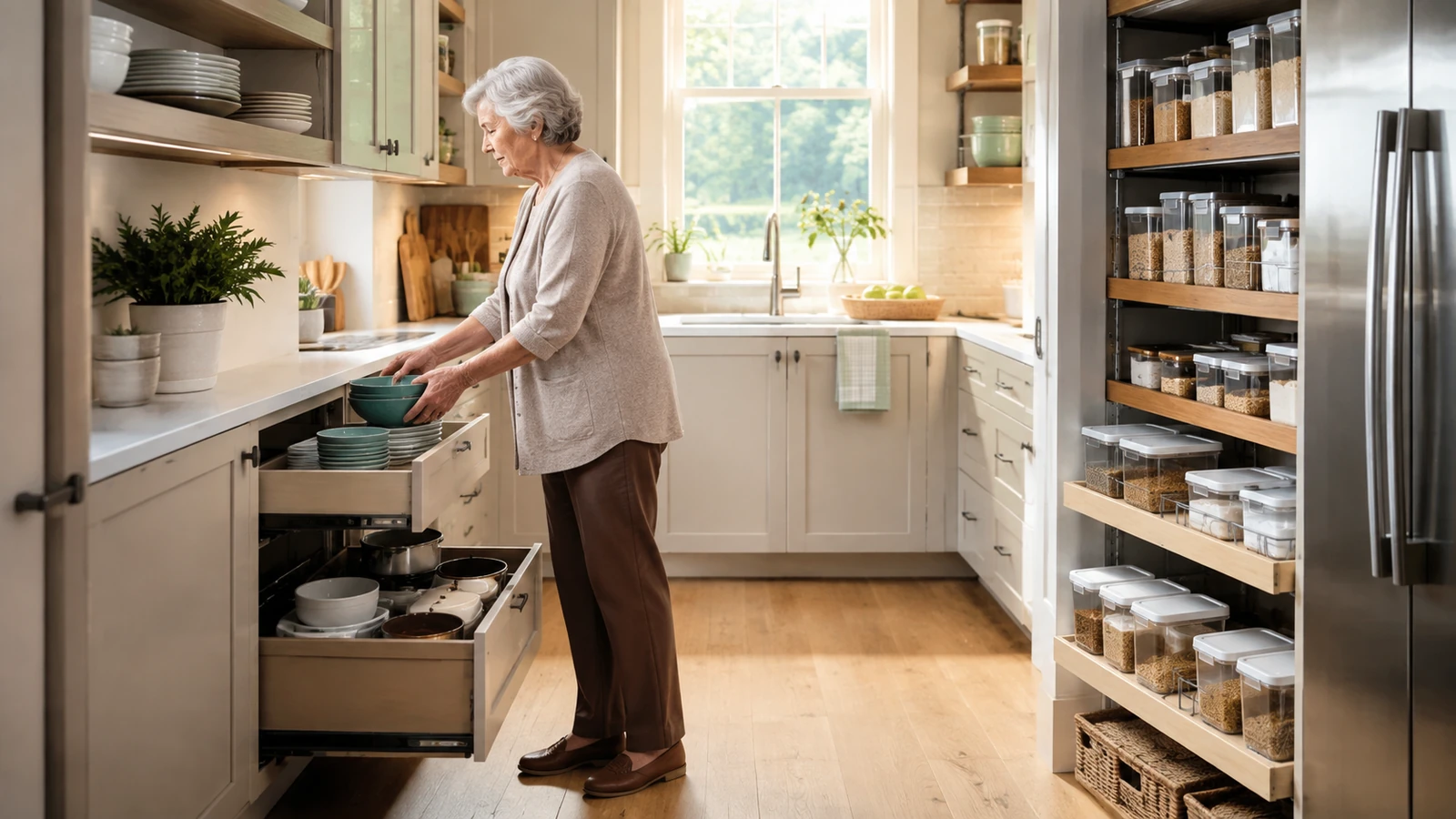
Drawers beat dark cabinets for many tasks
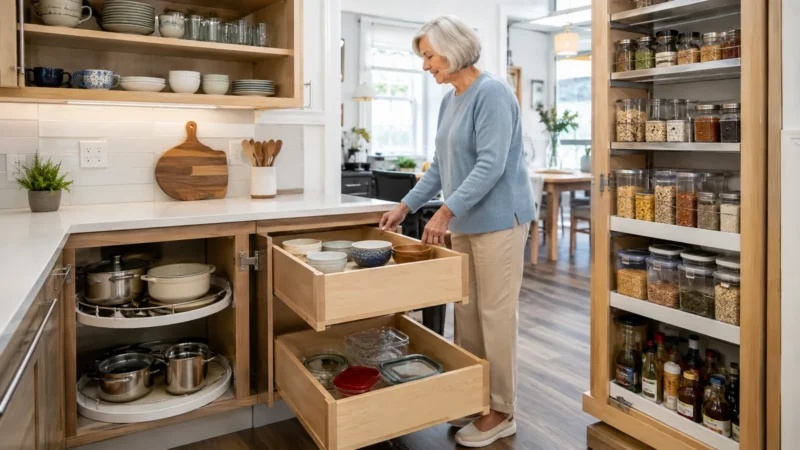
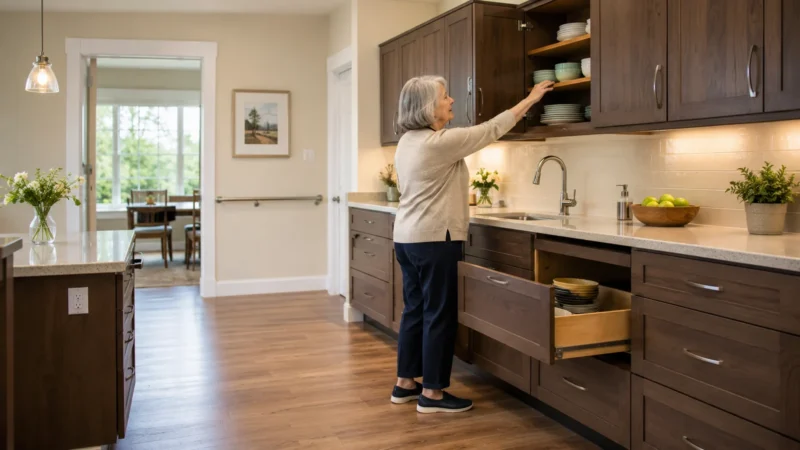
Wide drawers let users see cookware, dishes, food containers, and pantry items from above. Full-extension hardware allows the back of the drawer to come forward.
Use sturdy dividers so heavy pans do not shift unpredictably.
Use pull-outs strategically
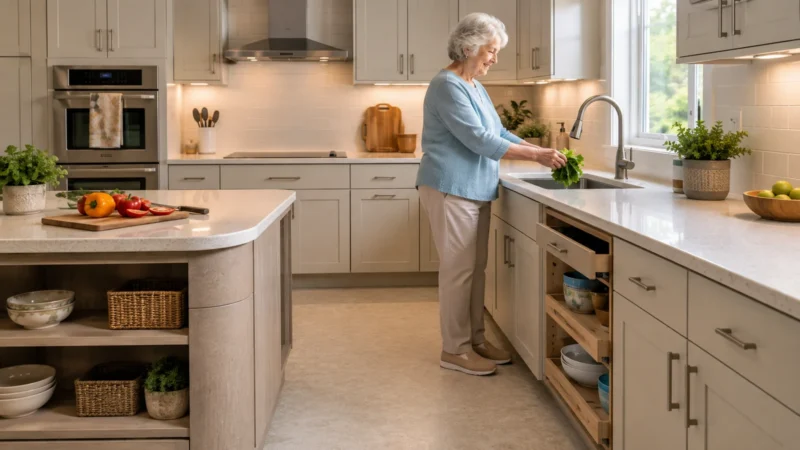
Pull-out shelves can retrofit existing base cabinets and pantries. They are especially helpful when the alternative is kneeling and reaching into the back of a deep cabinet.
Check side clearance and weight rating. A pull-out loaded with canned food can become very heavy.
Vertical storage
Cutting boards, trays, baking sheets, lids, and shallow pans are often easier to grasp vertically than when stacked.
Keep dividers close enough to prevent items from tipping.
Corner storage
Lazy Susans and corner pull-outs can make awkward cabinet corners more useful. However, complex mechanisms can also reduce usable volume and add moving parts.
Choose one only if it improves access for the actual items stored there.
Visible pantry systems
Labels, clear bins, and front-facing storage can reduce searching. Large type is more useful than decorative script.
Avoid transferring food into unlabeled containers if important cooking, allergy, or expiration information would be lost.
Countertop storage
Keeping a few daily items on the counter can be more practical than forcing everything behind doors. The tradeoff is work-surface clutter.
Create one intentional daily-use zone rather than scattering appliances and containers across every counter.
Keep pathways clean
Rolling carts can add storage but may become obstacles in a narrow kitchen. If one is used, it should have a stable parking location and reliable locking casters where appropriate.
Storage is successful when it reduces movement without adding something to navigate around.
Quick Reference
| Storage idea | Best for | Watch for |
|---|---|---|
| Deep drawers | Pots, dishes, pantry goods | Weight and divider stability |
| Full-extension pull-outs | Existing base cabinets | Load rating and clearance |
| Vertical dividers | Trays, lids, cutting boards | Tipping |
| Pull-out pantry | Food visibility | Heavy loads |
| Lazy Susan | Corner access | Mechanism complexity |
| Counter daily zone | Most-used appliances/items | Work-surface clutter |
Store by task instead of by tradition
You do not have to keep every item where a kitchen convention says it belongs. Put the things you use together near the place where you use them. Coffee supplies can live beside the coffee maker. Baking tools can share one drawer. Food-storage containers can stay close to the refrigerator.
This reduces unnecessary trips and makes it easier to remember where things belong.
Use drawers for heavy cookware and dishes
A deep drawer can make pots, pans, bowls, and even dishes easier to see and lift than a low cabinet with a fixed shelf. You can pull the contents toward you instead of reaching into a dark space.
Avoid overloading the drawer. Heavy stacks can make the mechanism hard to move and can still require awkward lifting.
Keep countertops useful, not crowded
Leaving a few frequently used appliances on the counter can reduce lifting, but too many items shrink the work area and make cleaning harder.
Choose the appliances that earn permanent counter space. Store cords so they do not cross walkways or hang where they can be caught.
Make labels and contents easier to see
Clear bins, large labels, shallow shelves, and consistent locations can reduce searching. The goal is not to turn the kitchen into a warehouse; it is to make common items easy to identify.
Use labels where they genuinely help, especially for similar containers or backup supplies. Keep the system simple enough that you will maintain it.
Choose the next change around the way you actually use the kitchen
You do not need to make the kitchen look different simply because you are over 55. Focus on the repeated task that feels awkward, tiring, hard to see, or difficult to reach. Solve that problem first, then see whether the rest of the room still works well.
If a change involves cabinetry, electrical work, plumbing, structural changes, gas, or another specialized task, use qualified help for that part of the project. A clear explanation of the problem you are trying to solve will make it easier to compare recommendations.
Keep the kitchen easy to maintain
A kitchen improvement should not create a new cleaning or maintenance burden. Pull-outs need to move smoothly, mats need to stay flat, lighting needs reachable controls, and frequently used surfaces should be simple to wipe down. Think about who will clean, repair, or adjust the new feature after the initial installation.
When two options solve the same problem, the one that is easier to understand and maintain may serve you better over time. Convenience only lasts when the feature continues working during ordinary busy weeks.
Make one change before rebuilding the whole room
If the kitchen does not require major construction, try the smallest practical improvement first. Move storage, change a light, add a pull-out, rearrange a work zone, or give a heavy appliance a permanent home. Then use the kitchen for several days and see whether the change solved the problem.
This approach can prevent expensive work from solving the wrong issue. It also gives you clearer information if you later hire a designer or contractor because you can explain what you already tried and what remains difficult.
Ask practical questions before you spend money
When comparing a product or renovation, ask what task it makes easier, what maintenance it requires, how it affects the surrounding space, and whether everyone who uses the kitchen can operate it. A feature is not automatically useful because it is marketed as accessible or senior-friendly.
Measure carefully and compare the full installed cost, especially when work involves cabinetry, electrical changes, plumbing, counters, flooring, or appliance relocation. Use qualified professionals where the project requires specialized work or permits.
Recheck the full kitchen route after the change
Every improvement affects the space around it. A new cart can narrow a walkway. A lowered cabinet can reduce counter clearance. A brighter fixture can create glare on a polished surface. A mat can make standing more comfortable while adding a raised edge near a doorway.
After making a change, walk from the entrance to the refrigerator, sink, cooking area, table, and the storage you use most. Test the route while carrying a plate, a grocery bag, or another item you normally handle. Keep the change if it makes the routine easier without creating a new problem somewhere else.
Sources
Frequently Asked Questions
What is the best storage upgrade without remodeling?
Reorganizing by frequency and adding pull-outs or dividers to existing cabinets often creates the biggest improvement.
Are lazy Susans good for older adults?
They can improve access in corners, but only if the mechanism is easy to operate and the stored items remain visible.
Should everything be put away?
Not necessarily. A small intentional countertop zone can reduce repeated lifting and reaching.
Where should heavy cookware be stored?
Usually between knee and shoulder height where it can be lifted with less overhead reaching or deep bending.
Are open shelves easier?
They can improve visibility, but they also collect dust and still need to be within comfortable reach.
Keep this visual on Pinterest
Save the infographic so you can return to the checklist or comparison when you need it.
 Save on Pinterest