A senior-friendly kitchen is simply a kitchen that asks less of your body while letting you keep cooking, eating, and gathering the way you enjoy. The best changes usually begin with reach, lighting, walking space, and the location of the things you use most.
Start with the work, not the cabinets
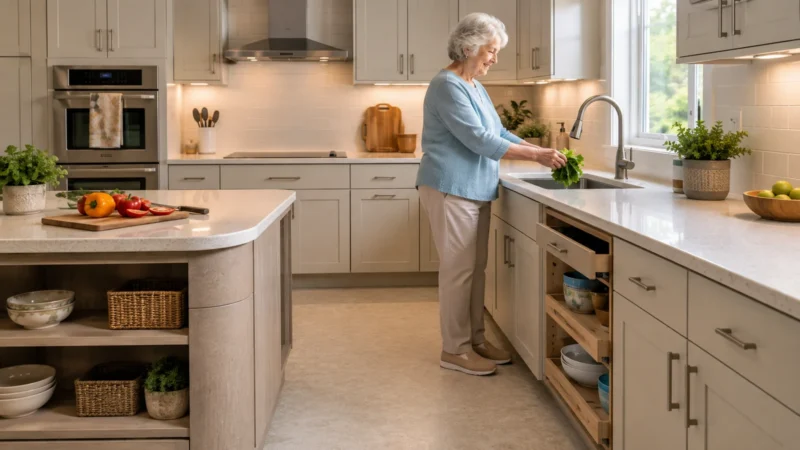
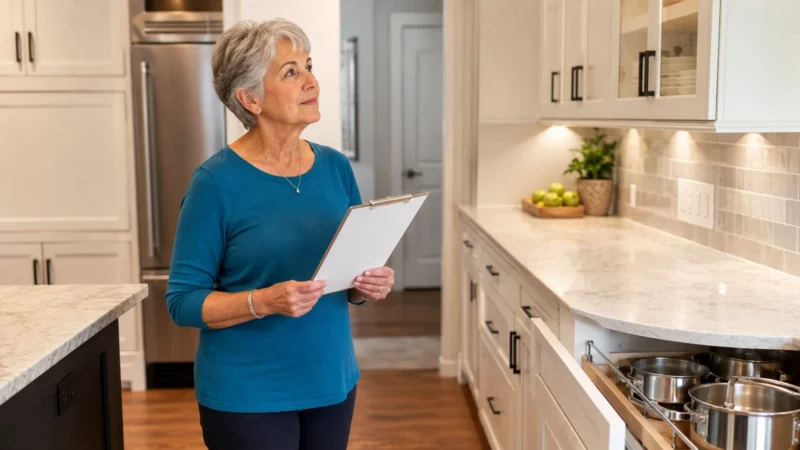
A useful aging-in-place kitchen is built around daily routines. Track the route from grocery entry to refrigerator, pantry, prep surface, cooking area, sink, dishwasher, and dish storage. Repeated long carries and awkward reaches are the first clues that a layout or organization change would help.
NIA recommends planning ahead for aging in place and reviewing the home for safety and accessibility as needs change. The kitchen benefits from that same approach: solve the problems that exist now while preserving flexibility for the future.
Make everyday storage easier to reach
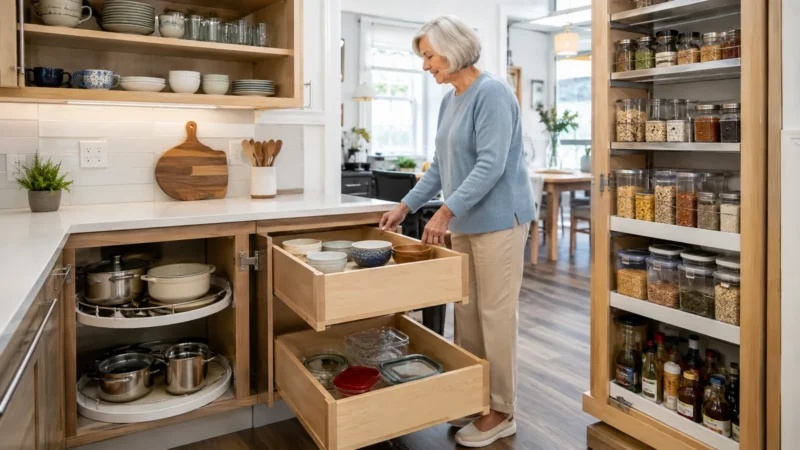
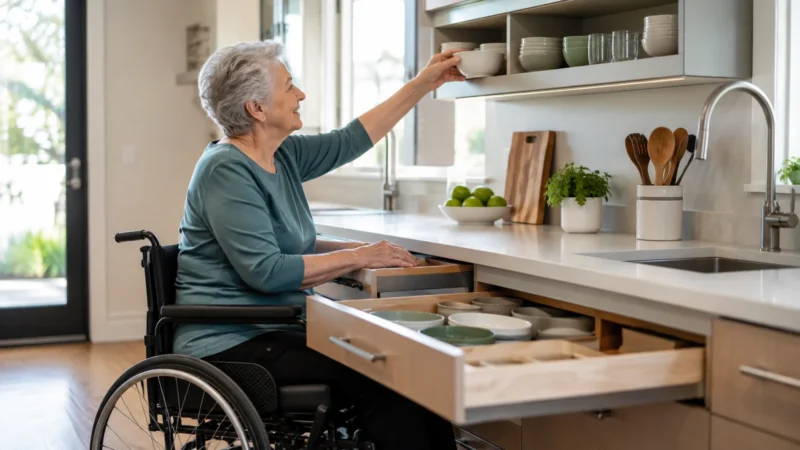
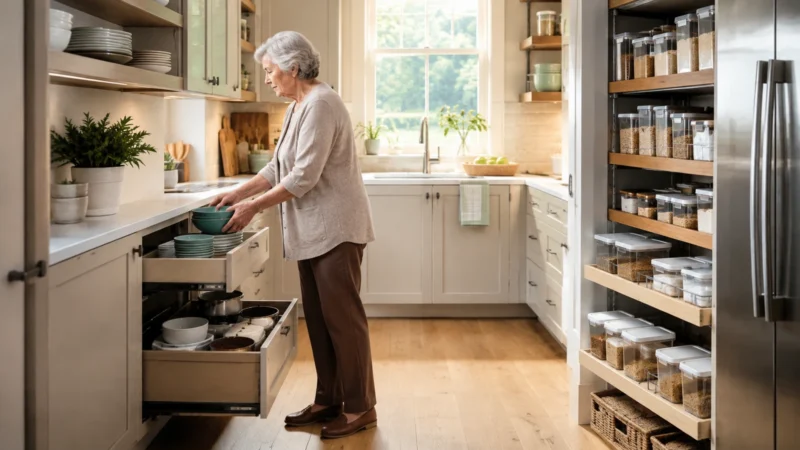
The most-used items should occupy the most comfortable reach zone. Deep drawers, pull-outs, adjustable shelves, and vertical dividers can make existing cabinetry much easier to use.
Avoid making a step stool part of the daily routine. If everyday dishes require climbing, relocate the dishes before remodeling the cabinet.
Reduce fall and fire risks
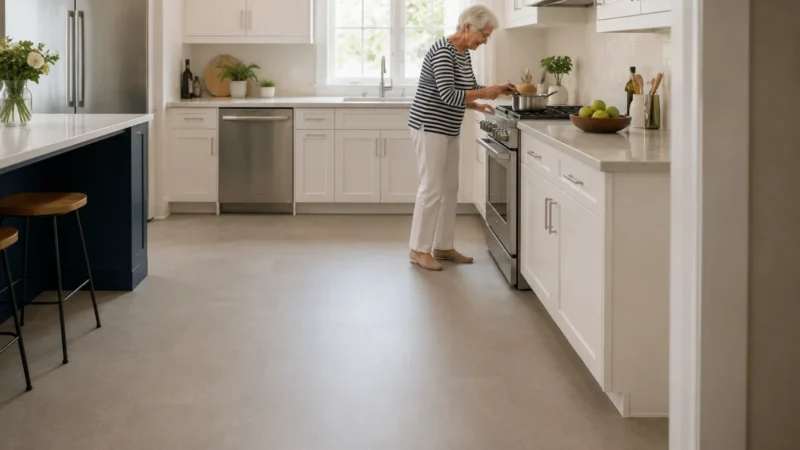
Stable low-glare flooring, clear paths, and strong lighting support safer movement. CPSC highlights falls as a major product-related injury issue among older adults and recommends slip-resistant surfaces and removal of tripping hazards.
Cooking safety requires attention as well. CPSC's 2026 cooking-safety reminder advises staying in the kitchen and keeping an eye on food while the stove is in use. Smart appliances can help with alerts, but they should not create false confidence.
Use accessibility standards as references, not assumptions
ADA standards include detailed requirements for accessible routes, work surfaces, sinks, storage, and clear floor space in covered kitchens. Those dimensions can be valuable during design.
Choose improvements in the right order
First remove hazards and reorganize. Next improve lighting, hardware, and storage systems. Then address fixtures, appliances, flooring, or counters. Major cabinet and layout changes come last unless they are the main barrier.
This order prevents a cosmetic remodel from consuming the budget while the most frustrating daily problems remain unsolved.
Arrange the kitchen around the work you actually do
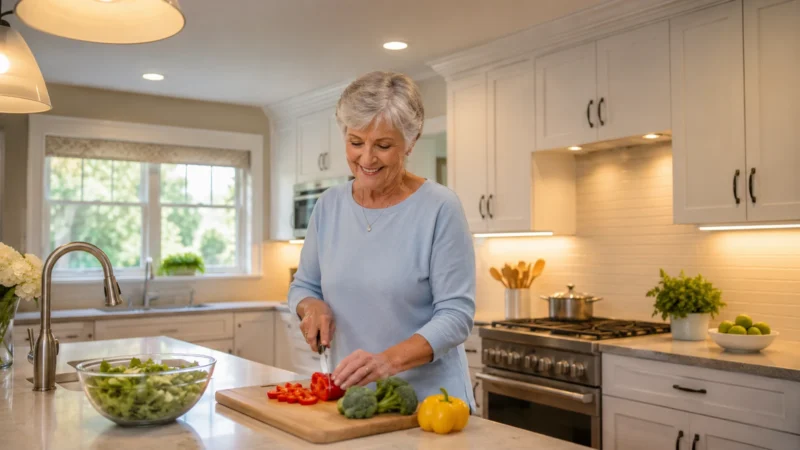
A kitchen becomes easier when the foods, tools, and appliances you use most are close to where you use them. You do not need to reorganize every cabinet at once. Start with one repeated task such as making breakfast, preparing coffee, cooking dinner, or taking medicine.
Put the items for that task within comfortable reach and reduce unnecessary trips across the room. A simple change in storage can save more effort than an expensive cabinet upgrade.
Keep everyday items between comfortable reaching heights
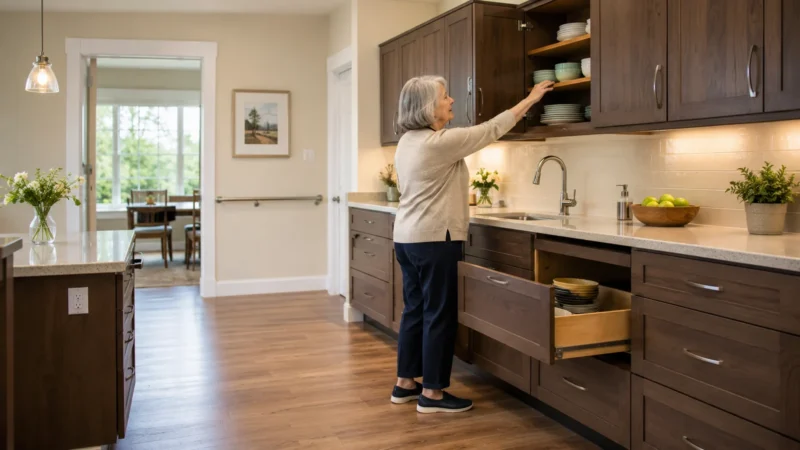
Very high shelves and deep low cabinets are useful for occasional storage, but they are poor locations for heavy or frequently used items. Repeated overhead reaching and deep bending can make ordinary cooking more tiring.
Move daily dishes, cookware, ingredients, and small appliances to shelves and drawers you can reach without a stool or awkward stretch. Store lighter, rarely used items in the harder-to-reach spaces.
Protect clear walking and working space
Open cabinet doors, pet bowls, stools, small rugs, cords, and bags can narrow the paths between the refrigerator, sink, stove, and table. These routes are often traveled while carrying something hot or heavy.
Keep the main work triangle and entry route clear. If a movable island or cart makes turning difficult, consider whether it is earning the space it occupies.
Improve task lighting where food is prepared
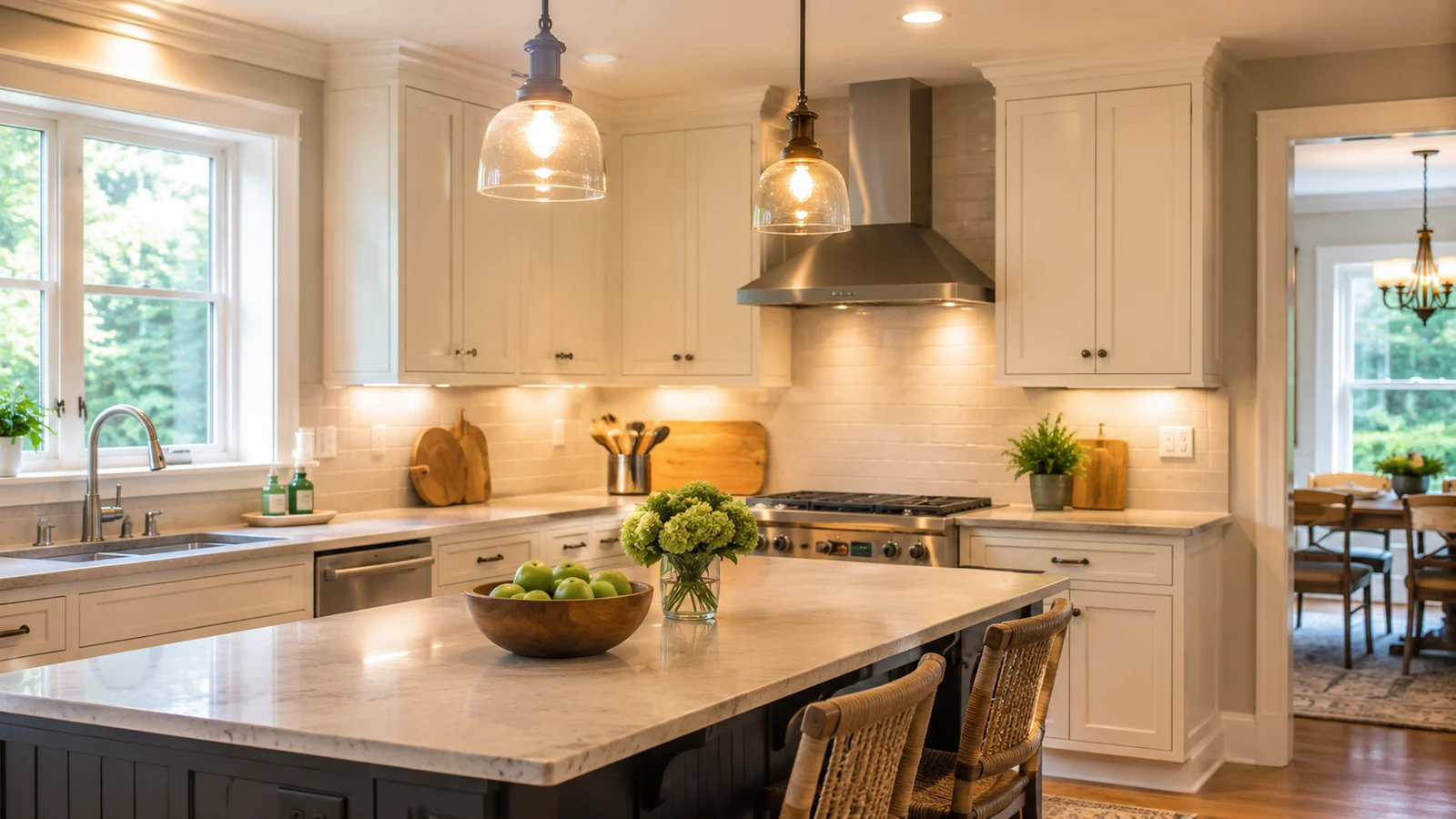
General ceiling light may not be enough for reading labels, chopping food, checking doneness, or seeing spills. Shadows from upper cabinets can make a counter look darker even in a bright kitchen.
Add focused light to the counters and work areas you use most. Reduce glare from shiny surfaces and make switches easy to reach.
Make faucets, handles, and controls easier to operate
Small knobs, stiff handles, and controls placed behind hot burners can add unnecessary effort. The best replacement depends on the existing fixture and what is actually difficult to use.
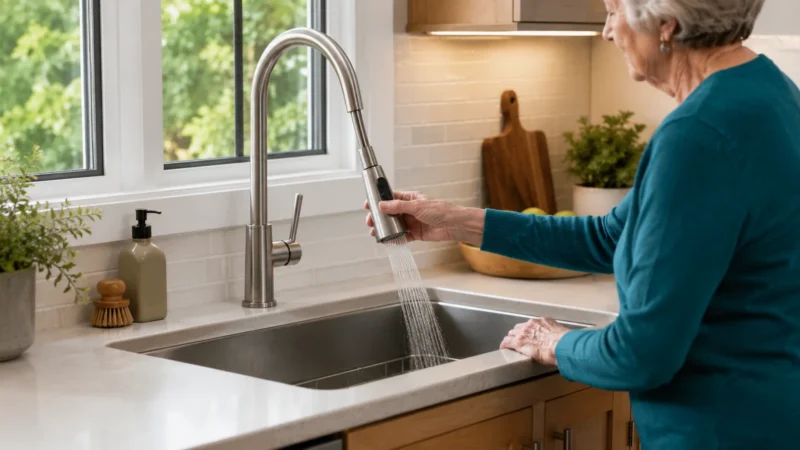
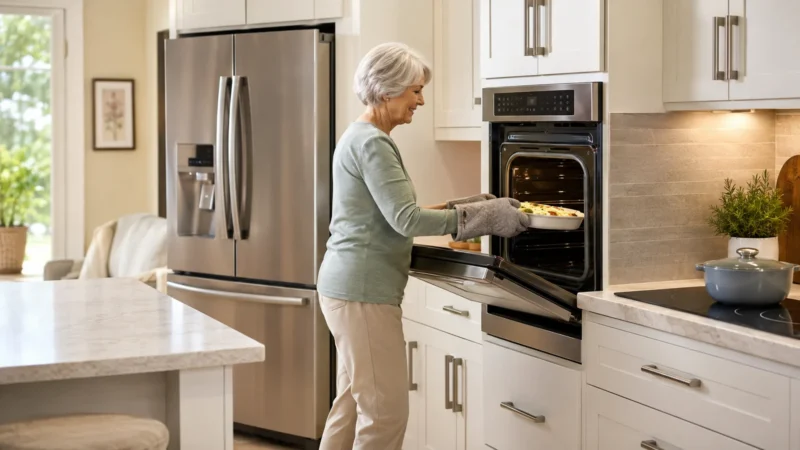
Lever-style handles, easy-to-read controls, and a faucet that operates comfortably can help. Before buying a new appliance, check how the doors, racks, displays, and controls feel in person when possible.
Create safe ways to sit or pause
Food preparation can involve long periods of standing. A stable seat at the right height may make chopping, sorting, or mixing easier, especially when the task does not require moving around the room.
Keep seating out of traffic paths and choose a stable surface rather than a lightweight stool that shifts easily. Place frequently used tools within reach of the seated position if that is part of your routine.
Plan larger kitchen changes around specific frustrations
Pull-out shelves, lower work surfaces, different cabinet hardware, an induction range, or a new layout can be useful, but only when the change solves a repeated problem.
List the tasks that are difficult before choosing products. If a full renovation is planned, think about clear floor space, storage reach, lighting, appliance access, and how two people move through the room at the same time.
Take the next step that makes daily life easier
You do not need to change everything at once. Choose one repeated frustration connected with senior-friendly kitchens, make one practical improvement, and see whether it makes the next week easier. A useful change should reduce effort, confusion, risk, or unnecessary dependence without taking away the parts of your routine you value.
When the issue involves specialized construction, professional services, legal requirements, health questions, or another area where individual circumstances matter, use qualified help for that part of the decision. The purpose of this guidance is to help you notice the right questions and approach the next step with more confidence.
Keep the plan tied to your everyday routine
A good decision is easier to maintain when it fits the way you already live. Before changing a room, buying equipment, signing up for a service, or reorganizing a routine, picture an ordinary weekday. Think about when you would use the change, where it would be stored, who else needs to understand it, and what happens on a busy or tiring day. If the solution only works when everything goes perfectly, it may be too complicated.
Try the smallest practical version first when that is safe and reasonable. A short trial can reveal whether the idea actually reduces effort or simply moves the problem somewhere else. Keep what works, adjust what does not, and let the next step be guided by your real experience rather than by a generic list of what someone your age is supposed to need.