
How to use the checklist
Walk through the kitchen during a normal meal rather than inspecting an empty room. Observe where someone reaches, carries, bends, pauses, or changes direction.
Mark each item Works Well, Plan Soon, or Fix Now. Fix Now should be reserved for unstable, broken, blocked, or clearly unsafe conditions.
Path and entry
Check doorway transitions, island clearance, chairs, pet bowls, trash cans, boxes, and cords. The path should remain clear even while cabinets and appliances are being used.
If a mobility device is used, test the actual turning and approach space.
Storage
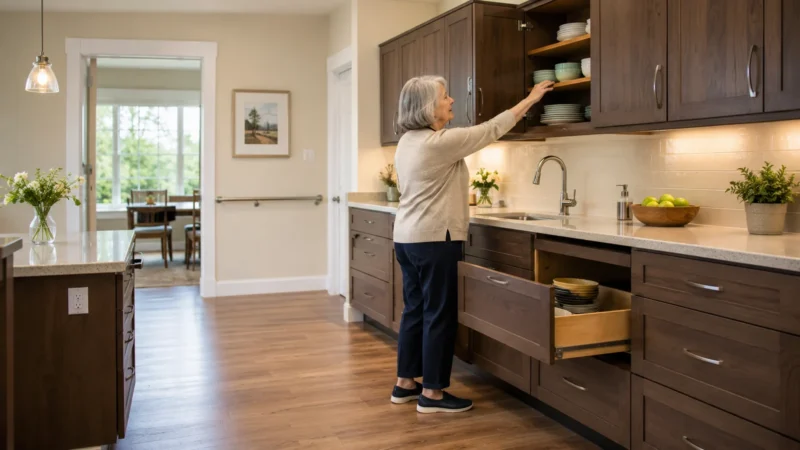
Can daily dishes, food, cookware, and small appliances be reached without a stool or deep bend? Do drawers extend far enough to see the back?
Move frequency before changing cabinetry.
Work surfaces
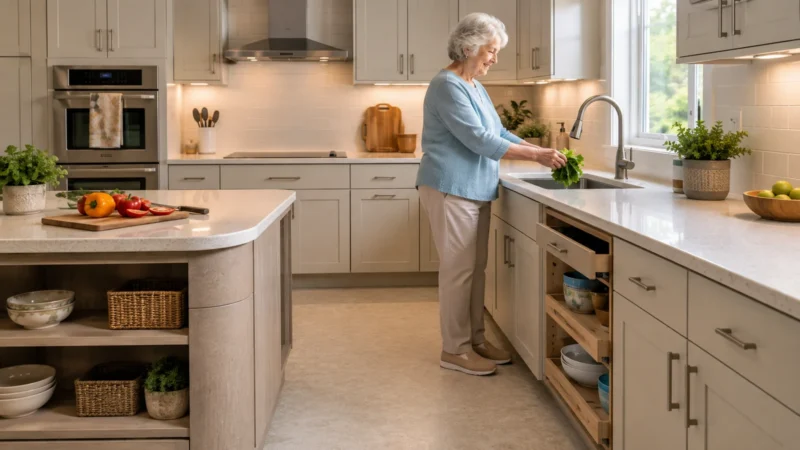
Is there at least one comfortable place for food prep? Can a seated task be done if needed? Is the countertop cluttered with appliances that reduce usable space?
A work surface should have good light and nearby storage.
Cooking
Check range controls, pot handling, oven height, microwave placement, ventilation, and the route for carrying hot food.
Cooking technology does not replace attention. CPSC advises staying in the kitchen while cooking.
Sink and cleanup
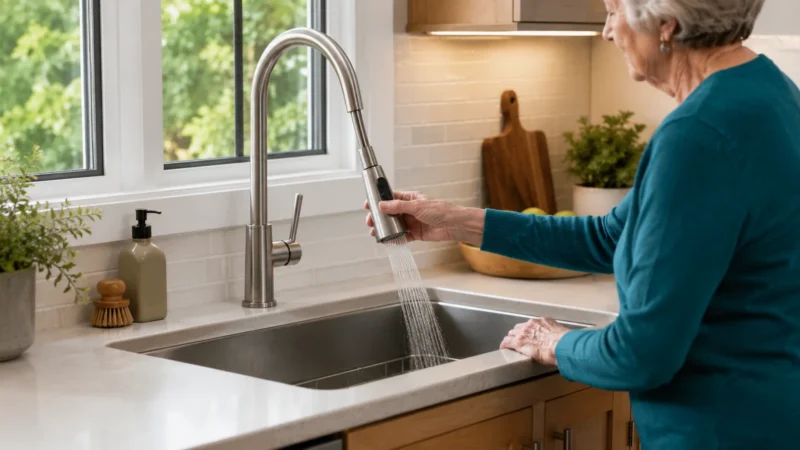
Can the faucet be operated comfortably? Are dishes stored near the dishwasher? Is the sink unnecessarily deep for the user?
Check for leaks and water that can make the floor slippery.
Lighting and floor
Look for shadows at counters, range, sink, and floor transitions. Check the floor for loose mats, damaged edges, slippery finishes, and glare.
NIA recommends addressing poor lighting and home hazards as part of aging-in-place planning.
Update the plan over time
A kitchen that works today may need different storage or equipment later. Revisit the checklist after a fall, injury, remodel, new mobility device, or when routine tasks start requiring more effort.
Small changes made early are often easier than emergency renovations.
Quick Reference
| Zone | Check | Status |
|---|---|---|
| Path | Clear route with no unstable obstacles | Works Well / Plan Soon / Fix Now |
| Storage | Daily items in comfortable reach | Works Well / Plan Soon / Fix Now |
| Prep | Comfortable, well-lit work surface | Works Well / Plan Soon / Fix Now |
| Cooking | Controls and hot-food route manageable | Works Well / Plan Soon / Fix Now |
| Sink | Faucet and basin easy to use | Works Well / Plan Soon / Fix Now |
| Floor | Stable traction and low transitions | Works Well / Plan Soon / Fix Now |
| Lighting | Counters, sink, range and path visible | Works Well / Plan Soon / Fix Now |
| Appliances | Controls, doors and loading heights usable | Works Well / Plan Soon / Fix Now |
Complete the checklist while the kitchen is in use
An empty kitchen can hide the real problems. Check the room while cooking, unloading groceries, cleaning up, and putting dishes away. Those routines reveal where bags, stools, pet bowls, open doors, and appliances narrow the path.
Write down what actually slows you down instead of giving the room a general score.
Separate daily inconveniences from true hazards
A dark stair to the basement, loose flooring, unstable mat, or damaged electrical outlet deserves different attention from a cabinet that is simply inconvenient.
Use priority labels such as Fix Now, Plan Soon, and Works Well so the important items do not get lost in a long list of preferences.
Turn every note into an action
Replace vague notes with a next step. “Cabinets too high” can become “move everyday glasses to lower shelf.” “Lighting poor” can become “add task light over cutting area.”
Specific actions are easier to complete, price, or discuss with a contractor or family member.
Review the kitchen after changes
A new appliance, storage system, cart, or piece of furniture can change the walking route. A solution that works well at first may also create a new obstruction.
Use the kitchen normally for a week, then repeat the checklist in the areas you changed.
Choose the next change around the way you actually use the kitchen
You do not need to make the kitchen look different simply because you are over 55. Focus on the repeated task that feels awkward, tiring, hard to see, or difficult to reach. Solve that problem first, then see whether the rest of the room still works well.
If a change involves cabinetry, electrical work, plumbing, structural changes, gas, or another specialized task, use qualified help for that part of the project. A clear explanation of the problem you are trying to solve will make it easier to compare recommendations.
Keep the kitchen easy to maintain
A kitchen improvement should not create a new cleaning or maintenance burden. Pull-outs need to move smoothly, mats need to stay flat, lighting needs reachable controls, and frequently used surfaces should be simple to wipe down. Think about who will clean, repair, or adjust the new feature after the initial installation.
When two options solve the same problem, the one that is easier to understand and maintain may serve you better over time. Convenience only lasts when the feature continues working during ordinary busy weeks.
Make one change before rebuilding the whole room
If the kitchen does not require major construction, try the smallest practical improvement first. Move storage, change a light, add a pull-out, rearrange a work zone, or give a heavy appliance a permanent home. Then use the kitchen for several days and see whether the change solved the problem.
This approach can prevent expensive work from solving the wrong issue. It also gives you clearer information if you later hire a designer or contractor because you can explain what you already tried and what remains difficult.
Ask practical questions before you spend money
When comparing a product or renovation, ask what task it makes easier, what maintenance it requires, how it affects the surrounding space, and whether everyone who uses the kitchen can operate it. A feature is not automatically useful because it is marketed as accessible or senior-friendly.
Measure carefully and compare the full installed cost, especially when work involves cabinetry, electrical changes, plumbing, counters, flooring, or appliance relocation. Use qualified professionals where the project requires specialized work or permits.
Sources
Frequently Asked Questions
What should be marked Fix Now?
Anything broken, unstable, slippery, blocked, or forcing unsafe climbing or reaching.
How often should I repeat the kitchen checklist?
Repeat it when routines change, after a fall or injury, after new mobility equipment, or at least periodically as part of home-safety review.
Do I need accessibility measurements for every feature?
No. Start with how the actual user performs the task. Use accessibility standards as references where appropriate.
What is the cheapest kitchen improvement?
Reorganize by frequency, remove obstacles, improve task lighting, and relocate heavy items.
When should I hire a professional?
Use qualified help for electrical, plumbing, gas, structural, cabinet-installation, or major layout changes.
Keep this visual on Pinterest
Save the infographic so you can return to the checklist or comparison when you need it.
 Save on Pinterest