Build a one-zone routine
A kitchen can often be made easier by creating one primary zone for breakfast, drinks, medication reminders, or simple meals. Keep the mug, cup, coffee or tea, common utensils, and easy foods together.
This reduces repeated trips across the room.
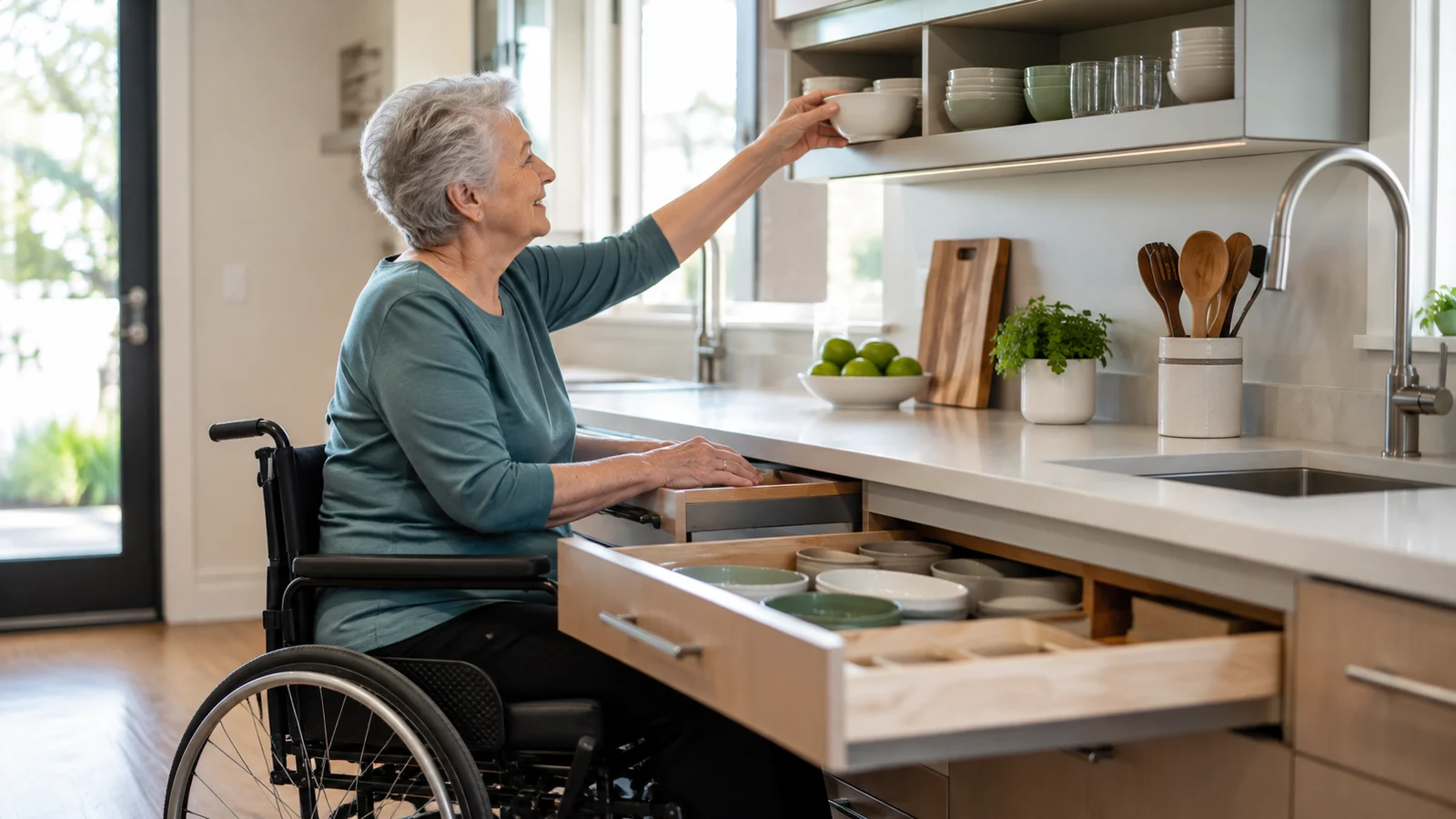
Move heavy items into mid-level storage
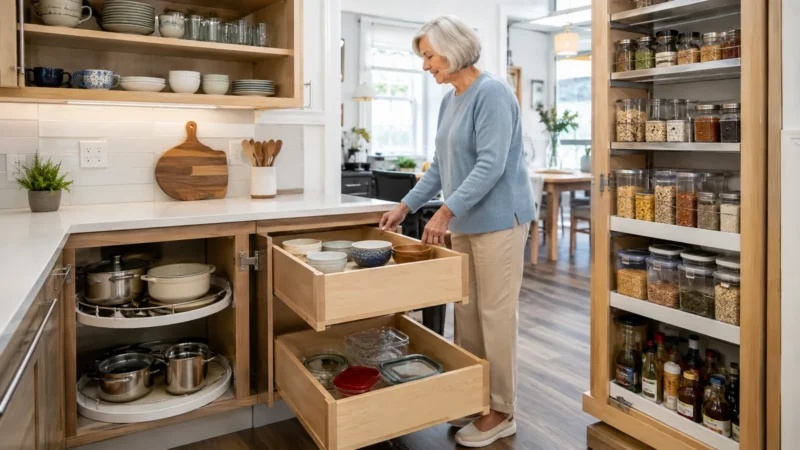
Heavy pots, small appliances, beverage containers, and bulk food are difficult to manage overhead or near the floor. Put them on shelves or in drawers where the user can get both hands around the item without a deep bend.
Use sliding shelves so the item comes forward.
Create seated prep space
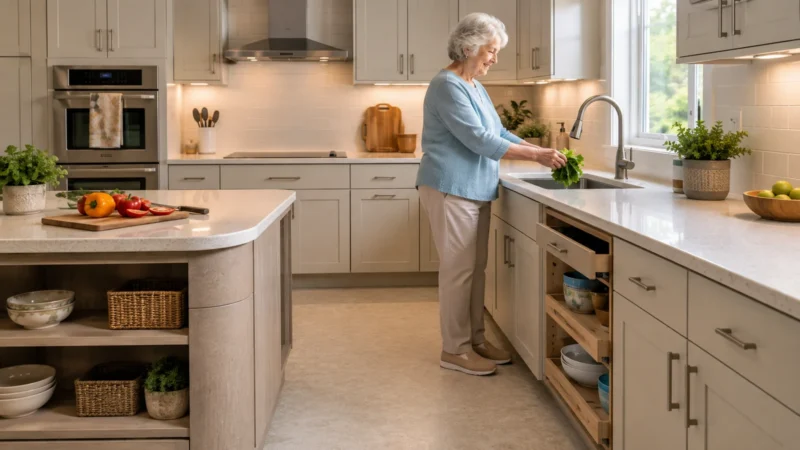
A stable chair at a table may provide seated prep without remodeling. For a permanent design, a lower or open-knee work area can support seated tasks.
If a wheelchair approach is needed, clear floor space, knee clearance, surface height, and nearby storage must be coordinated. ADA standards can inform this planning in covered settings and as a reference elsewhere.
Reduce carrying
Keep plates close to the dishwasher, glasses near the refrigerator or sink, and cooking utensils near the range. If groceries enter through one doorway, create a nearby set-down surface.
A lightweight rolling cart can help in some homes but should have a designated parking location so it does not become an obstacle.
Make drawers visible
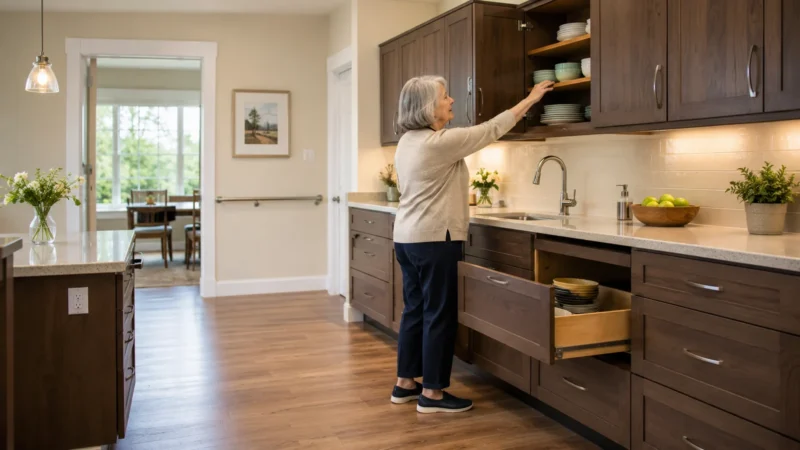
Label drawers and shelves with clear words or simple icons if that helps the household. Transparent bins can help in a pantry, but avoid overcomplicating the system with dozens of tiny categories.
The system should be easy to reset after every use.
Keep the route predictable
Do not store folding stools, pet bowls, reusable bags, boxes, or delivery packages in the main path. Repair floor transitions and ensure lighting reaches the route.
A walker, cane, or wheelchair needs a path that stays open every day, not only immediately after the kitchen is cleaned.
Quick Reference
| Task | Keep nearby | Reduce |
|---|---|---|
| Breakfast/drinks | Mug, beverage, cereal/snacks | Trips across kitchen |
| Food prep | Knife, board, bowl, trash access | High/low reaching |
| Cooking | Utensils, pans, seasoning | Carrying hot items |
| Cleanup | Dishwasher, dish storage, towels | Cross-room dish travel |
| Groceries | Set-down surface, pantry/refrigerator | Carrying from entrance |
Create one complete work zone for a common task
When movement is limited, repeated trips across the kitchen can make a simple task exhausting. Build one zone for something you do often, such as breakfast, coffee, sandwiches, or medication preparation.
Keep the tools, ingredients, dishes, and cleanup supplies for that task close together so the routine requires fewer steps and less carrying.
Keep heavy items at mid-level
Large pots, mixing bowls, small appliances, bottled drinks, and bulk food can be difficult to move from a high shelf or floor-level cabinet.
Store heavier items around waist height when possible. If an appliance is too heavy to move regularly, give it a permanent counter or shelf location.
Use carts only when the route supports them
A rolling cart can move dishes or ingredients, but it needs enough clear floor space and should not become another obstacle when parked.
Choose a stable cart with wheels that lock when needed. Store it out of the main walkway when it is not in use.
Plan for seated work
A lower work surface, open knee space, or stable table can allow some tasks to be done while seated. The area should still provide enough room to turn and reach supplies safely.
Keep sharp tools, hot items, and cords arranged so they do not cross the seated work area.
Choose the next change around the way you actually use the kitchen
You do not need to make the kitchen look different simply because you are over 55. Focus on the repeated task that feels awkward, tiring, hard to see, or difficult to reach. Solve that problem first, then see whether the rest of the room still works well.
If a change involves cabinetry, electrical work, plumbing, structural changes, gas, or another specialized task, use qualified help for that part of the project. A clear explanation of the problem you are trying to solve will make it easier to compare recommendations.
Keep the kitchen easy to maintain
A kitchen improvement should not create a new cleaning or maintenance burden. Pull-outs need to move smoothly, mats need to stay flat, lighting needs reachable controls, and frequently used surfaces should be simple to wipe down. Think about who will clean, repair, or adjust the new feature after the initial installation.
When two options solve the same problem, the one that is easier to understand and maintain may serve you better over time. Convenience only lasts when the feature continues working during ordinary busy weeks.
Make one change before rebuilding the whole room
If the kitchen does not require major construction, try the smallest practical improvement first. Move storage, change a light, add a pull-out, rearrange a work zone, or give a heavy appliance a permanent home. Then use the kitchen for several days and see whether the change solved the problem.
This approach can prevent expensive work from solving the wrong issue. It also gives you clearer information if you later hire a designer or contractor because you can explain what you already tried and what remains difficult.
Ask practical questions before you spend money
When comparing a product or renovation, ask what task it makes easier, what maintenance it requires, how it affects the surrounding space, and whether everyone who uses the kitchen can operate it. A feature is not automatically useful because it is marketed as accessible or senior-friendly.
Measure carefully and compare the full installed cost, especially when work involves cabinetry, electrical changes, plumbing, counters, flooring, or appliance relocation. Use qualified professionals where the project requires specialized work or permits.
Recheck the full kitchen route after the change
Every improvement affects the space around it. A new cart can narrow a walkway. A lowered cabinet can reduce counter clearance. A brighter fixture can create glare on a polished surface. A mat can make standing more comfortable while adding a raised edge near a doorway.
After making a change, walk from the entrance to the refrigerator, sink, cooking area, table, and the storage you use most. Test the route while carrying a plate, a grocery bag, or another item you normally handle. Keep the change if it makes the routine easier without creating a new problem somewhere else.
Sources
Frequently Asked Questions
What should I organize first?
Start with the task performed most often, such as breakfast or meal preparation, and group everything needed for that task.
Should I buy more organizers?
Not necessarily. Reassigning existing shelves and drawers by frequency often helps before purchasing anything.
Is a rolling cart useful?
It can reduce carrying, but it needs stable casters and a parking place outside the main path.
How can I make food prep easier while seated?
Use a stable seated work surface with adequate knee room and keep tools and ingredients within easy reach.
When is remodeling necessary?
Consider remodeling when organization cannot solve a major access problem such as an obstructed path, unusable work height, or inaccessible sink or appliances.
Keep this visual on Pinterest
Save the infographic so you can return to the checklist or comparison when you need it.
 Save on Pinterest