Stop treating every shelf as equal
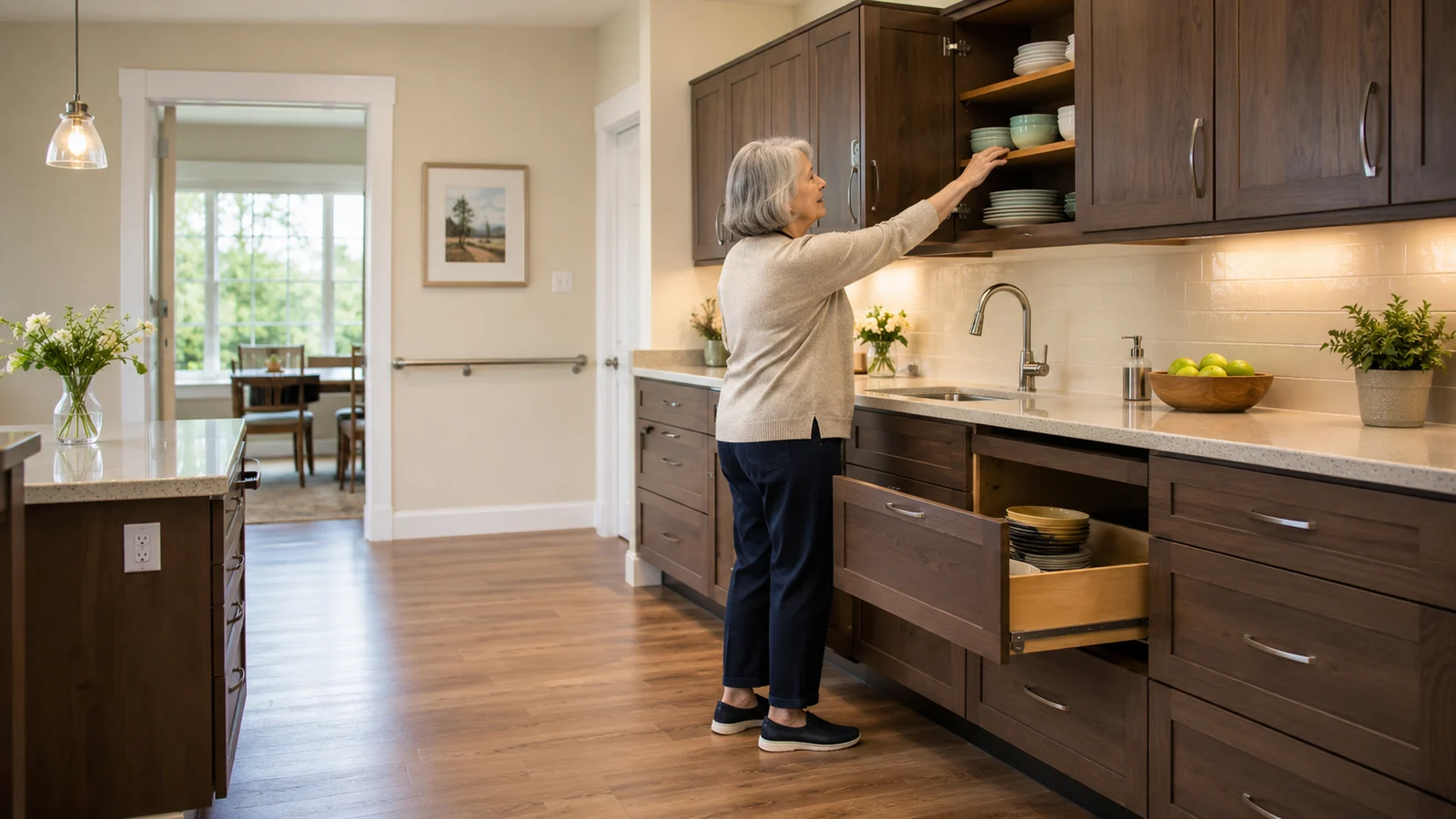
Upper shelves often become long-term storage for items that are rarely used. That is fine. The problem begins when daily dishes, medicines, cookware, or food are stored where they require climbing.
Create a daily-use zone first. This may eliminate the need for structural changes.
Use pull-down shelf systems
Mechanical pull-down shelves bring upper-cabinet contents forward and downward. They can be useful when the cabinet itself cannot be relocated.
Check the mechanism’s weight rating, handle reach, cabinet dimensions, and whether the user can control the shelf as it moves. A system that requires significant pulling force may not help the intended user.
Add shelf risers and vertical dividers
Sometimes the difficulty is not height but visibility. Shelf risers create multiple levels for cups or dishes, while vertical dividers keep trays and cutting boards upright.
The goal is to avoid stacking heavy items that must be lifted down from overhead.
Relocate pantry staples
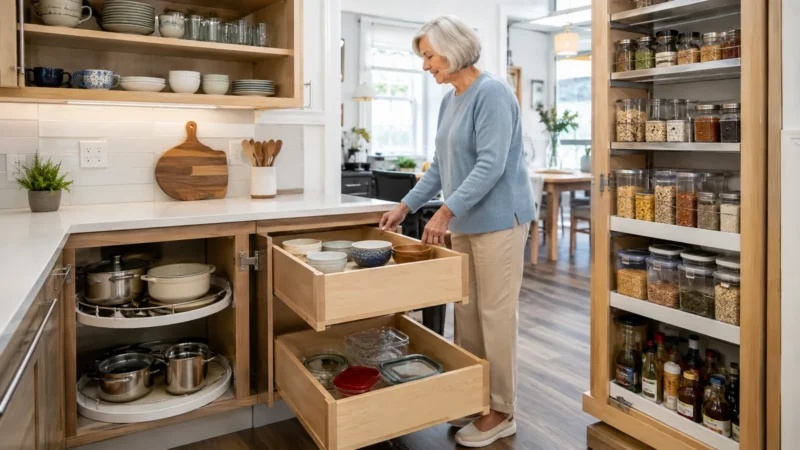
Daily foods can move into drawers, a pull-out pantry, lower shelves, or countertop containers if appropriate. Keep frequently used items visible so they are not forgotten behind taller packages.
Use labels that are easy to read from the normal viewing position.
Avoid unsafe climbing habits
CPSC identifies falls as a major source of injury among older adults and recommends reducing fall hazards. A kitchen routine that requires climbing on chairs or unstable stools deserves redesign.
If a step stool is used for occasional access, it should be designed for climbing, stable, and used according to the manufacturer’s instructions. It should not become the everyday solution.
When lowering cabinets may make sense
If several users cannot reach the existing wall cabinets, or a seated-access design is planned, lowering or replacing some cabinets may be worthwhile.
Before doing so, check countertop appliance clearance, backsplash space, sightlines, and whether doors will interfere with the work surface.
Quick Reference
| Problem | Lower-cost response | Larger change |
|---|---|---|
| Daily dishes too high | Move to lowest upper shelf or drawer | Lower/replace selected cabinet |
| Items lost in deep cabinet | Shelf risers or organizers | Pull-down shelf mechanism |
| Heavy appliances overhead | Relocate to counter-height storage | Appliance garage or pull-out shelf |
| Need step stool every day | Reorganize daily zone | Redesign storage layout |
Move the routine before adding a reaching device
If you reach for the same item several times a week, the simplest answer may be to store it somewhere else. A pull-down shelf can help, but it also adds hardware, weight limits, and another mechanism to maintain.
Start by moving everyday items to an easier shelf. Use higher storage for seasonal dishes, extra paper goods, and other things you rarely need.
Avoid step stools for ordinary daily storage
A step stool may be useful for an occasional task, but relying on one every day means the storage system is working against you. Carrying an item while stepping down also leaves less room to steady yourself.
If you must use a stool, choose a stable model with a secure handhold and use it only on a level surface. Never climb onto a chair or countertop.
Use vertical space inside easier-to-reach cabinets
Shelf risers, tray dividers, and vertical organizers can create more usable storage without sending items higher. They can also keep stacks from becoming heavy and awkward to lift.
Use organizers only when they make the contents easier to see and reach. A crowded cabinet full of small organizers can become harder to use than an open shelf.
Create a backup location for occasional items
Some kitchens simply do not have enough easy-reach space for everything. A nearby pantry, dining-room cabinet, or sturdy shelf can hold items that are not part of the daily routine.
Keep a short list of what is stored there so you do not buy duplicates or forget where something was moved.
Choose the next change around the way you actually use the kitchen
You do not need to make the kitchen look different simply because you are over 55. Focus on the repeated task that feels awkward, tiring, hard to see, or difficult to reach. Solve that problem first, then see whether the rest of the room still works well.
If a change involves cabinetry, electrical work, plumbing, structural changes, gas, or another specialized task, use qualified help for that part of the project. A clear explanation of the problem you are trying to solve will make it easier to compare recommendations.
Keep the kitchen easy to maintain
A kitchen improvement should not create a new cleaning or maintenance burden. Pull-outs need to move smoothly, mats need to stay flat, lighting needs reachable controls, and frequently used surfaces should be simple to wipe down. Think about who will clean, repair, or adjust the new feature after the initial installation.
When two options solve the same problem, the one that is easier to understand and maintain may serve you better over time. Convenience only lasts when the feature continues working during ordinary busy weeks.
Make one change before rebuilding the whole room
If the kitchen does not require major construction, try the smallest practical improvement first. Move storage, change a light, add a pull-out, rearrange a work zone, or give a heavy appliance a permanent home. Then use the kitchen for several days and see whether the change solved the problem.
This approach can prevent expensive work from solving the wrong issue. It also gives you clearer information if you later hire a designer or contractor because you can explain what you already tried and what remains difficult.
Ask practical questions before you spend money
When comparing a product or renovation, ask what task it makes easier, what maintenance it requires, how it affects the surrounding space, and whether everyone who uses the kitchen can operate it. A feature is not automatically useful because it is marketed as accessible or senior-friendly.
Measure carefully and compare the full installed cost, especially when work involves cabinetry, electrical changes, plumbing, counters, flooring, or appliance relocation. Use qualified professionals where the project requires specialized work or permits.
Sources
Frequently Asked Questions
Are pull-down cabinet shelves worth it?
They can be useful when upper storage must remain, but check reach, operating force, weight capacity, and cabinet fit.
Should heavy items ever go on the top shelf?
Heavy items are generally easier to handle when stored between knee and shoulder height rather than overhead.
Is using a step stool unsafe?
A properly designed stable step stool may be appropriate for occasional use, but everyday climbing is a sign that frequently used items should be relocated.
Can I convert lower cabinets to drawers?
Often yes, using retrofit pull-outs or during a cabinet renovation.
What should stay on high shelves?
Light, rarely used items that do not need frequent access.
Keep this visual on Pinterest
Save the infographic so you can return to the checklist or comparison when you need it.
 Save on Pinterest